Building Future-Ready Students

School Cybersecurity & AI Programs

Comprehensive training programs designed for Class 6–12 students to build digital safety, ethical hacking foundations, and tech innovation.
School Cybersecurity & AI Illustration
Total Streams4 Streams
Duration12 Months Program
Learning FormatBlended (Theory + Practical Labs)
Weekly Commitment8 - 10 Hours / Week

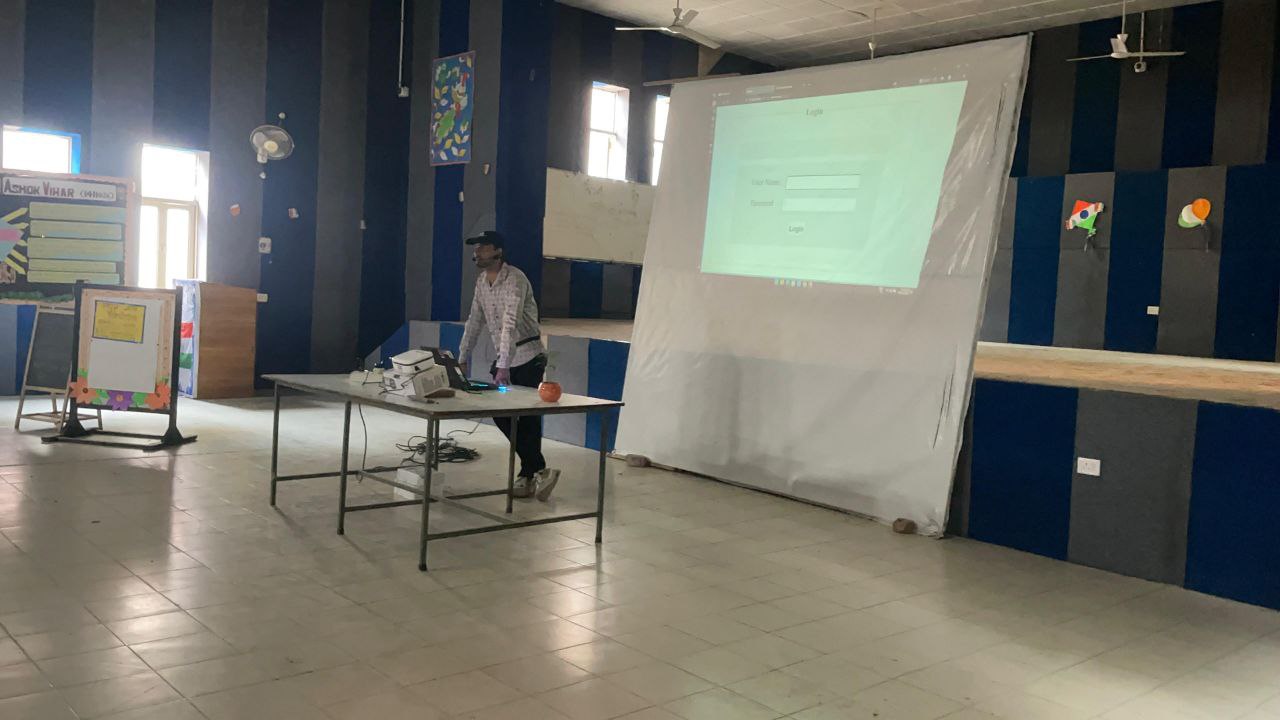
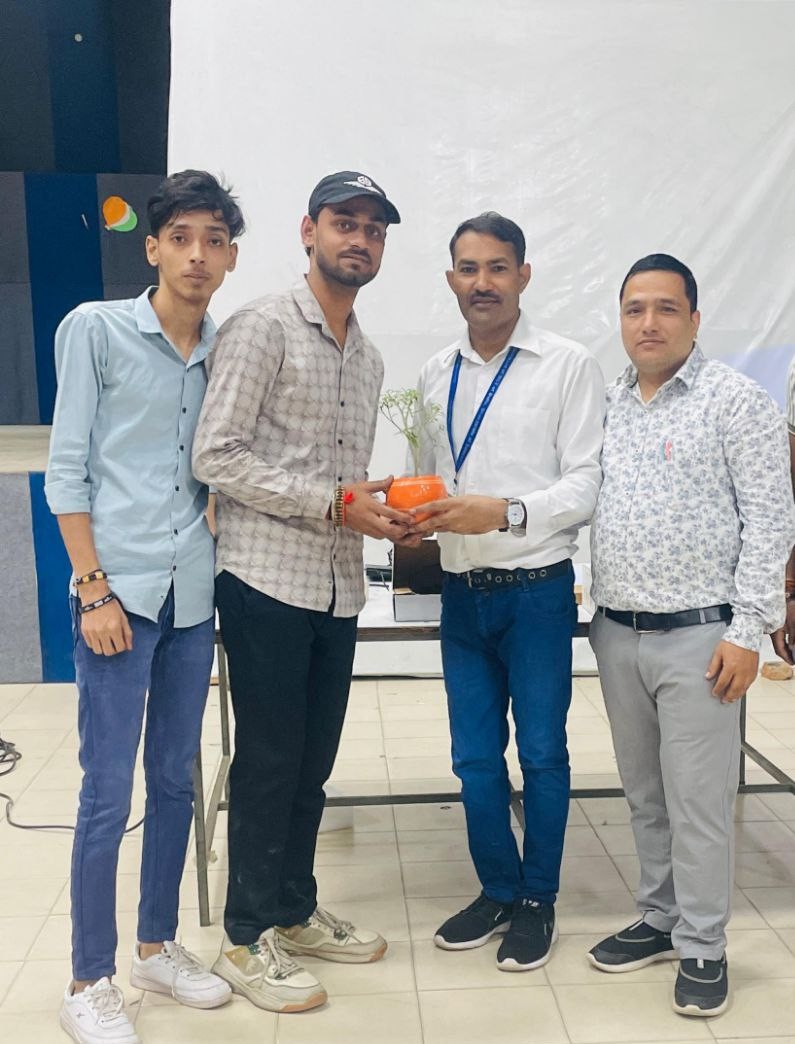
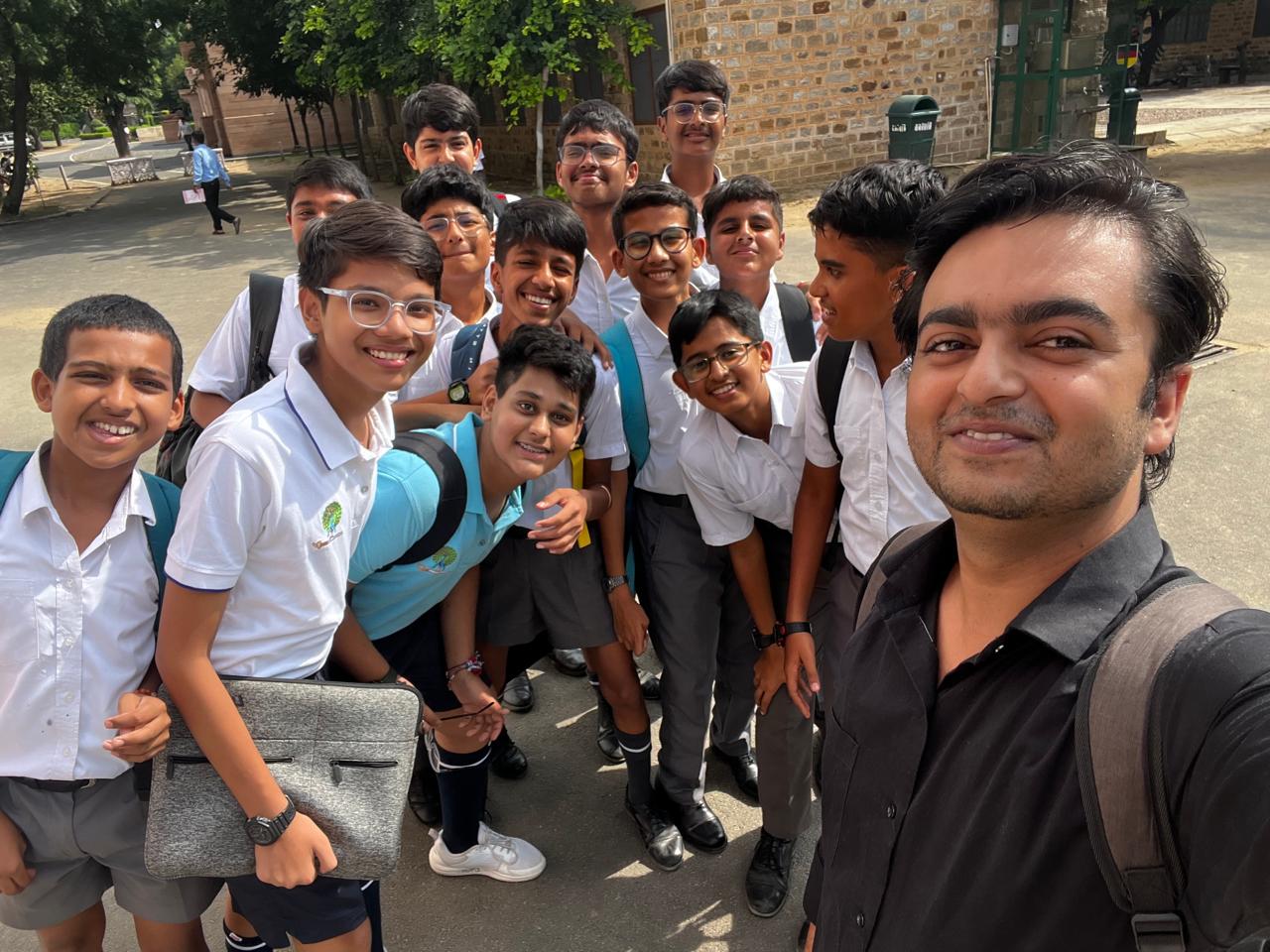
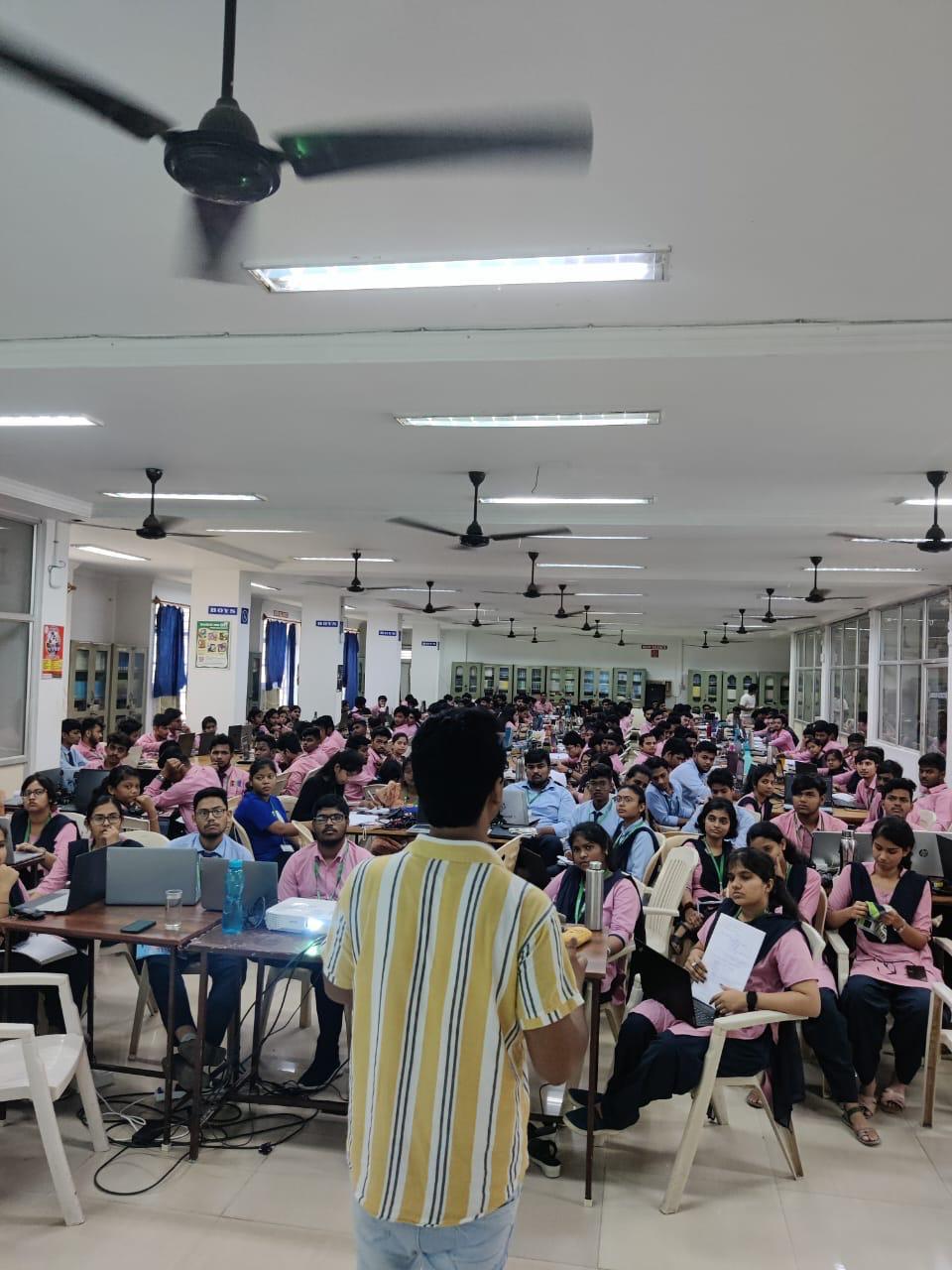
Practical Learning in Action

Empowering the next generation of technology innovators

Our Professional Curriculum

Industry-oriented learning designed for schools, colleges, and academic partnerships seeking future-ready technology education.

1
How the internet works in real-world environments
Digital identity and online presence
Digital footprint and its long‑term impact
Common cyber risks students face today
Safe browsing and secure online behaviour
Cyber hygiene practices used by security professionals
Real‑life student cyber incident discussion
Digital footprint self‑assessment activity
2
Importance of authentication in cybersecurity
Strong vs weak password comparison
Password reuse and credential leak risks
Common password attack techniques (conceptual only)
Secure password creation strategies
Password managers and secure storage
Two‑Factor and Multi‑Factor Authentication (2FA/MFA)
Password strength testing lab
Enabling 2FA on demo environments
3
Understanding the phishing attack flow
Email phishing, smishing, and vishing attacks
Fake websites and malicious link identification
Psychology behind social engineering attacks
Online scams targeting students and families
Identifying red flags in messages and emails
Phishing email detection exercises
Fake vs genuine website comparison
Scam reporting simulation
4
Social media attack surface and privacy risks
Account takeover and impersonation risks
Privacy and security settings management
Oversharing and digital reputation impact
Cyberbullying and online harassment awareness
Mobile device security fundamentals
App permissions and data misuse
Risks of public Wi‑Fi and unsecured networks
Live social media privacy audit
Mobile application permission review
5
What data is and why it is valuable
Personal data vs sensitive data classification
Real-world data breach incidents (case studies)
How data leaks occur in practical scenarios
Introduction to cybercrime and its impact
Basics of Indian cyber laws for students
Digital rights and responsibilities
Cybercrime reporting awareness and walkthrough
Data breach case study analysis
6
What cybersecurity means in real environments
Common cyber attacks explained with examples (DDoS, ransomware, phishing)
Malware types and real‑world behaviour (virus, worm, trojan, spyware)
Understanding vulnerabilities and misconfigurations
Ethical hacking concepts and boundaries
Red Team vs Blue Team overview
Defensive security mindset development
Attack and defence flow walkthroughs
7
Basic networking concepts: IP, DNS, ports, protocols
How devices communicate over networks
How attackers identify weak networks (conceptual)
Firewalls and access control basics
Secure Wi‑Fi configuration concepts
Importance of software updates and patching
Malware infection flow explanation
Network diagram analysis exercise
8
Introduction to AI: what it is and what it is not
AI vs traditional security approaches
Role of AI in threat detection (spam filters, anomaly detection)
AI‑based spam and fraud detection
Behavior‑based anomaly detection (how AI learns “normal”)
Limitations of AI in cybersecurity (false positives, bias)
AI-powered security system demonstrations
9
How ML models learn from data (training, testing, accuracy)
Supervised, unsupervised, and reinforcement learning (simple analogies)
ML in fraud detection (credit card, banking)
Anomaly detection use cases (network intrusion, account takeover)
Data bias and false positives in security systems
No-code ML model demonstration
Security-focused ML case studies
10
Understanding IoT and smart devices (home, classroom, city)
Common security weaknesses in IoT systems
Smart home and smart city security risks
Automation and connected system threats
AI‑powered automation examples (good and bad)
Securing connected environments
IoT risk assessment activity
1
Principles of ethical hacking
Compliance and legal boundaries
Security fundamentals
2
TCP/IP protocol suites
Routing and traffic routing mechanics
Deep packet inspections
3
Configuring clean environments
Securing sandbox setups
Basic defensive tools
4
Attacking and defending passwords
MFA bypass mitigation
Credential store security
5
Open source intelligence collection
Information gathering strategies
Target footprinting
6
Port scanning & service discovery
Network mapping techniques
System banners gathering
7
Discovering known vulnerabilities
Exploit tools execution (Metasploit)
Remediation planning
8
Privilege escalation on Linux & Windows
Lateral movement in active directory
Maintaining persistent access safely
9
Clearing logs and system traces
Documenting technical audit steps
Executive reporting guidelines
10
Phishing scenarios setup
Human psychology exploitation
Defense and user awareness training
11
Wireless networks vulnerability assessment
Securing IoT interfaces
Radio frequency testing basics
12
Interactive Capture the Flag challenge
Vulnerability chain challenge
Team-based attack and defense drill
1
Double-spending problem
Decentralized consensus
Distributed ledger benefits
2
Hash functions (SHA-256)
Asymmetric key cryptography
Public and private keys usage
3
Block header & body structure
Merkle trees details
Chaining blocks together
4
Proof of Work mechanism
Nonce calculation
Mining rewards & hardware
5
Proof of Stake (PoS)
Delegated PoS and PBFT
Sybils defense comparison
6
UTXO transactions model
Bitcoin network nodes
Wallets & seed phrases security
7
Solidity basics
Execution on virtual machines
Contract compilation & deployment
8
EVM gas fees architecture
Web3 providers integrations
dApp user interface building
9
Supply chain tracing
Decentralized identity (DID)
Healthcare records management
10
51% attacks scenario
Reentrancy vulnerability in smart contracts
Flash loan exploits
11
Decentralized Autonomous Organizations structures
Web3 browsers
Sovereign identity concepts
12
Coding a mock chain in python/JS
Simulating peer nodes sync
Adding transaction pool validation
1
Defining artificial intelligence
Strong AI vs. Weak AI
Brief history of computing and AI
2
Data cleaning process
Feature engineering basics
Handling missing values
3
Supervised learning introduction
Unsupervised learning overview
Reinforcement learning basics
4
Vectors and matrices
Probability and statistics
Gradient descent concept
5
Linear and Logistic Regression
Decision trees and Random Forests
Evaluating model accuracy metrics
6
K-Means clustering
Dimensionality reduction (PCA)
Market basket analysis applications
7
Perceptron fundamentals
Hidden layers & activation functions
Backpropagation concepts
8
Tokenization & word embeddings
Sentiment analysis models
Recurrent Neural Networks (RNNs) usage
9
Image classification concepts
Convolutional Neural Networks (CNNs)
Object detection and segmentation
10
Transformers architecture overview
Prompt engineering tactics
Fine-tuning pre-trained models
11
Detecting algorithmic bias
Adversarial input noise injection
Responsible AI guidelines
12
Training an image/text classifier
Deploying the model interface
Testing model against hostile inputs

Additional Program Features

We go beyond the classroom with expert-led sessions and practical certifications.

Student Certification

Module Completion & Final Program Completion Certificates provided.

Faculty Awareness

Dedicated sessions for teachers and school staff to build digital awareness.

Monthly Workshops

Expert-led workshops focused on emerging technologies and cyber awareness.

Intensive Bootcamps

1 to 5-day practical bootcamps covering AI tools, Blockchain, and Innovation challenges.

Live Demonstrations

Real-time phishing demonstrations and threat simulation labs for practical exposure.

Innovation Projects

Mini technology projects and team-based problem-solving exercises.

Value Proposition

Why Our Program Stands Out

We deliver a transformative educational experience that bridges the gap between academic theory and real-world technology application.

Industry-Oriented Curriculum

Designed according to modern technology trends and future digital workforce requirements.

Practical Learning Approach

Hands-on activities, labs, demonstrations, and innovation-based learning.

Future Tech Exposure

Early exposure to Cyber Security, AI, Blockchain, Web3, and Digital Innovation.

Expert-Led Training

Delivered by experienced professionals from Cyber Security, AI, and Emerging Tech domains.

Supported by Industry Experts

Backed by TSN Security's Professional Services

Our curriculum is built on the real-world experience of TSN Security, leveraging expertise from advanced investigative and defense services.

VAPTForensicsExecutive ProtectionTech Based TrainingRed TeamingCyber Crime InvestigationOSINT IntelligenceBrand ProtectionCorporate Investigation

VAPT

Forensics

OSINT

Red Team

Training with Professional Tech & Hacking Tools

We focus on industry readiness. Students gain practical experience using the exact same software and libraries deployed by cybersecurity, AI, and blockchain professionals worldwide.

Kali Linux logo

Kali Linux

Penetration Testing OS

Wireshark logo

Wireshark

Network Traffic Analysis

Nmap logo

Nmap

Vulnerability Scanning

Metasploit logo

Metasploit

Exploitation Framework

Burp Suite logo

Burp Suite

Web App Security

TensorFlow logo

TensorFlow

AI / Neural Networks

Solidity logo

Solidity

Smart Contracts Development

Python logo

Python

Core Security Scripting

PyTorch logo

PyTorch

Deep Learning Research

Docker logo

Docker

Application Containerization

Git logo

Git

Distributed Version Control

Linux logo

Linux

Core System Foundations

Student Success

The Proof is in the Results: Student Testimonials

Read how our 1-year certified training empowers high school and college students to master complex technical domains.

“
★★★★★

"TSN's cyber security program is hands-down the best training I've ever experienced. Getting to run active directory pentesting and packet inspection labs on mock networks gave me real hacker skills that textbooks just can't teach."

Aman Sharma

Grade 11 Student / Cybersecurity Enthusiast

“
★★★★★

"The AI/ML modules are outstanding. I went from knowing basic Python to training neural networks and building deep learning classifiers. The capstone hack simulation was both challenging and incredibly rewarding."

Priyanjali Roy

B.Tech Computer Science Student

“
★★★★★

"Designing and deploying a decentralized application on an Ethereum test network was mind-blowing. The curriculum makes complex cryptography and consensus algorithms incredibly easy to follow and build."

Kabir Mehta

Grade 12 Student / Web3 Developer

ACADEMIC PARTNERSHIP

Empower Your Students Today

Partner with TSN Security to build a digitally aware, security-conscious, and innovation-driven student body.