CYBER FACULTY FORGE · TSN SECURITY FDP

Faculty Development Program (FDP)

Comprehensive 30-module AI-integrated curriculum covering Cybersecurity with AI, Blockchain, and AI/ML for university educators and academic leaders.
TSN Security Motto: Suspect All, Inspect All, Respect All
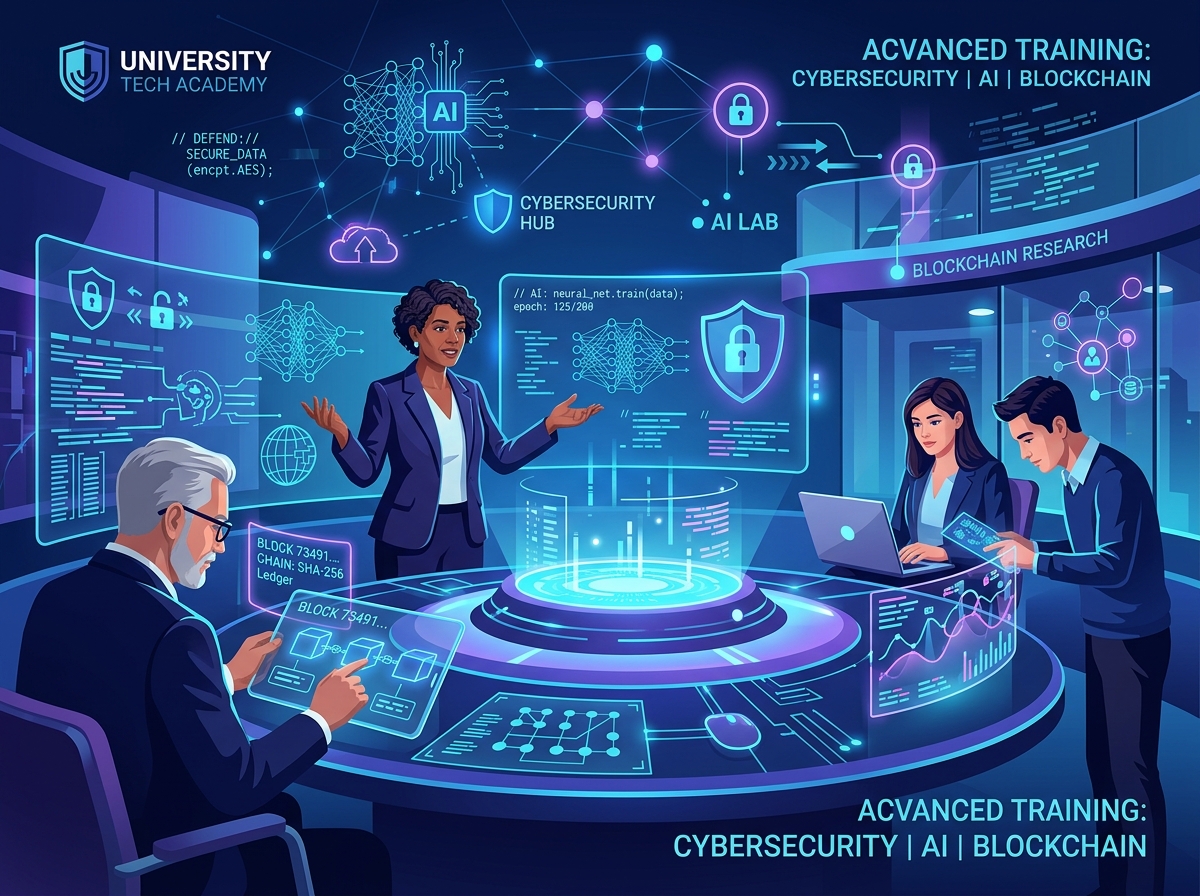
Faculty Development Program Illustration
NEP 2020 Aligned
Cybersecurity with AI · Blockchain · AI/ML
Specialist Tracks3 FDP Tracks
Total Content30 AI Modules
Pedagogy ModelMRM-Framework
Academic StandardsNEP 2020 Aligned

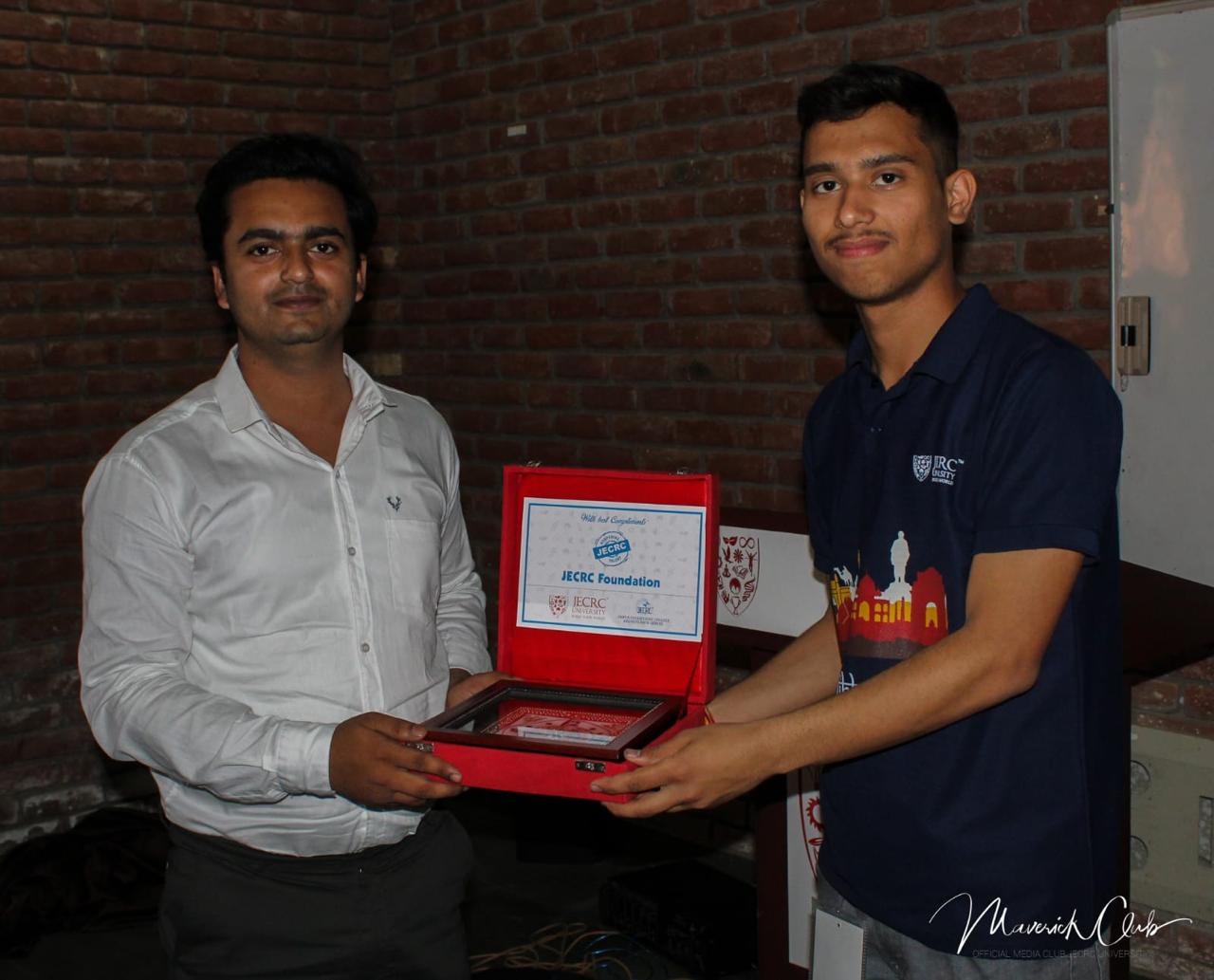
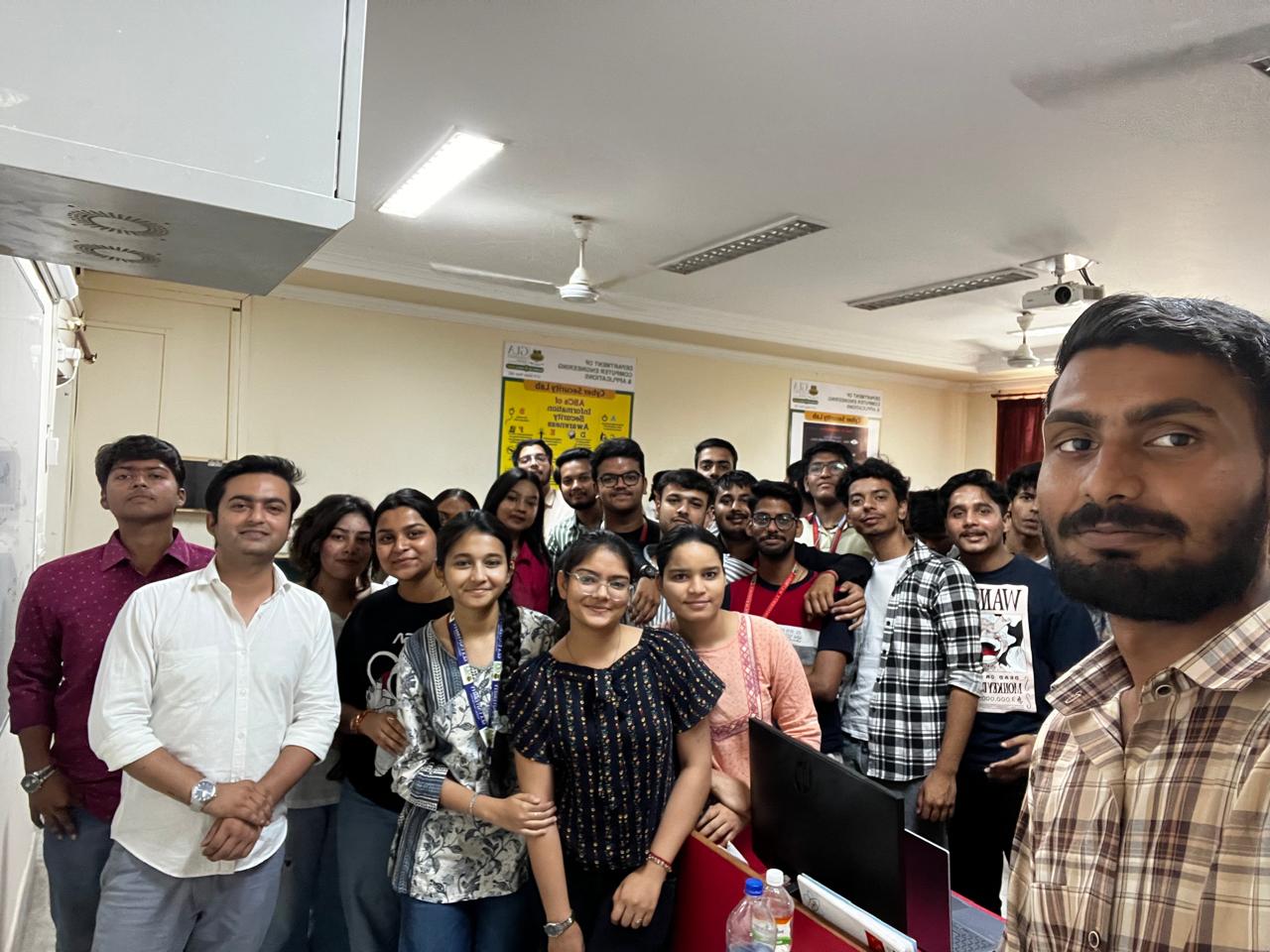
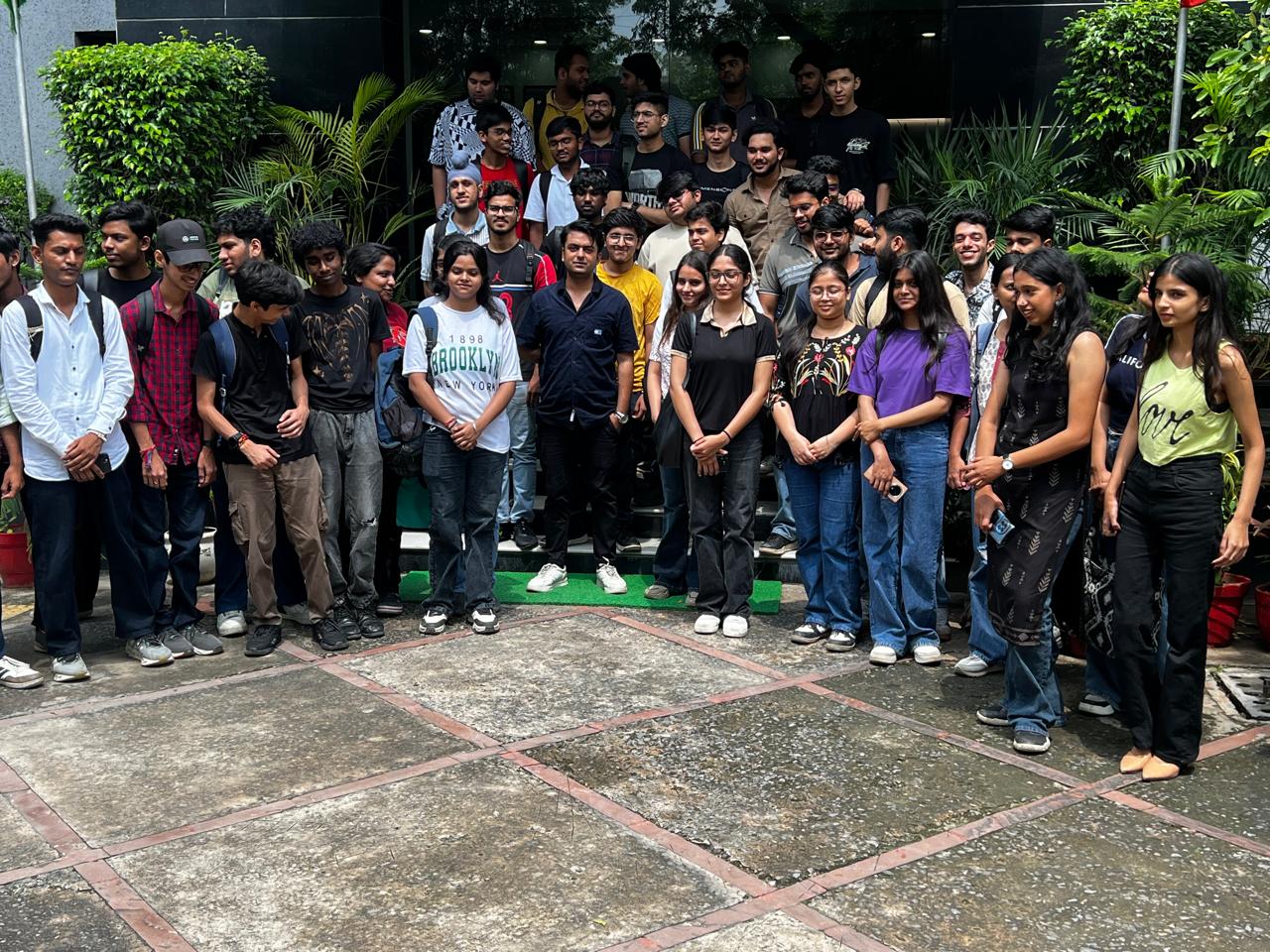
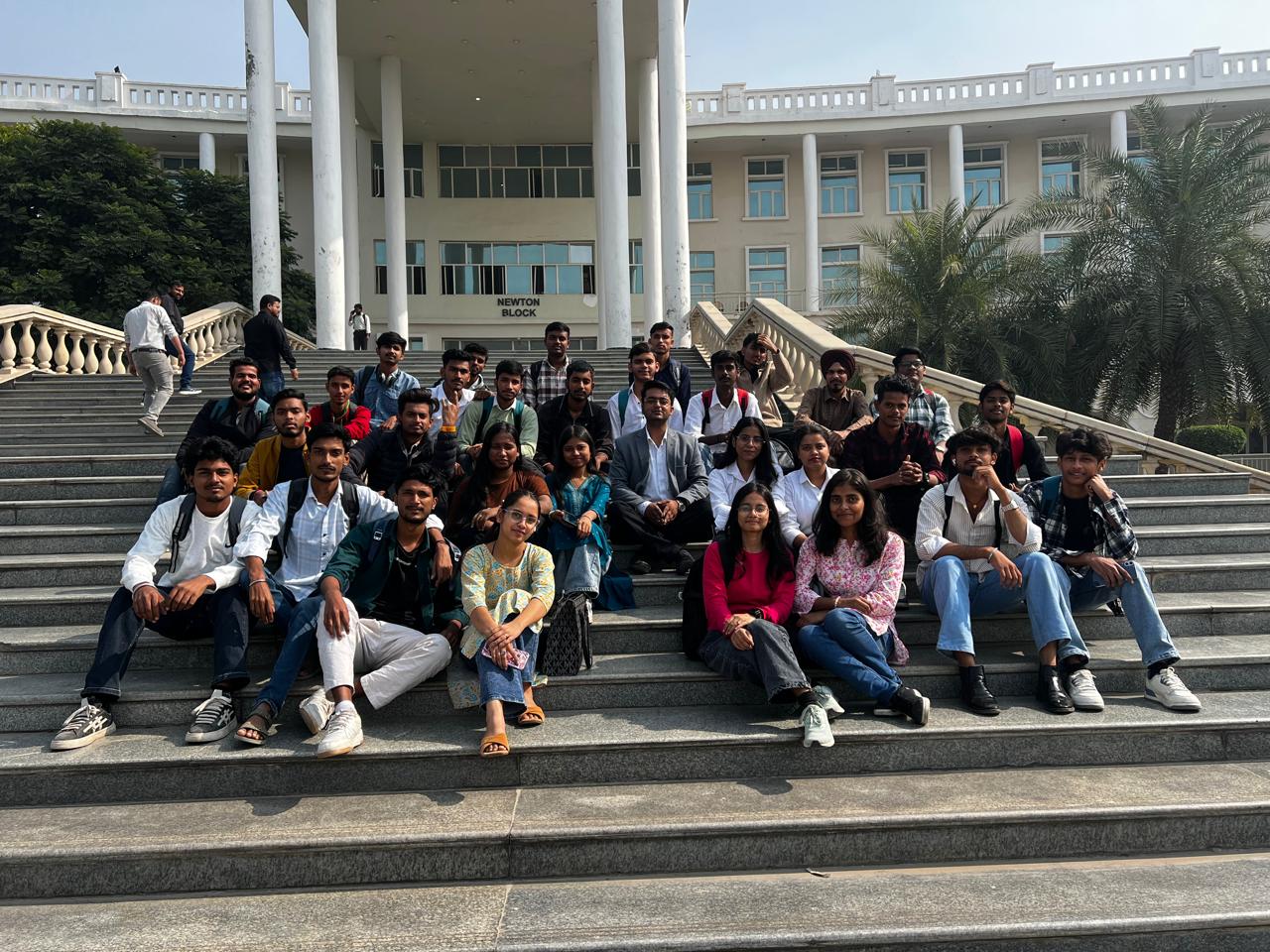
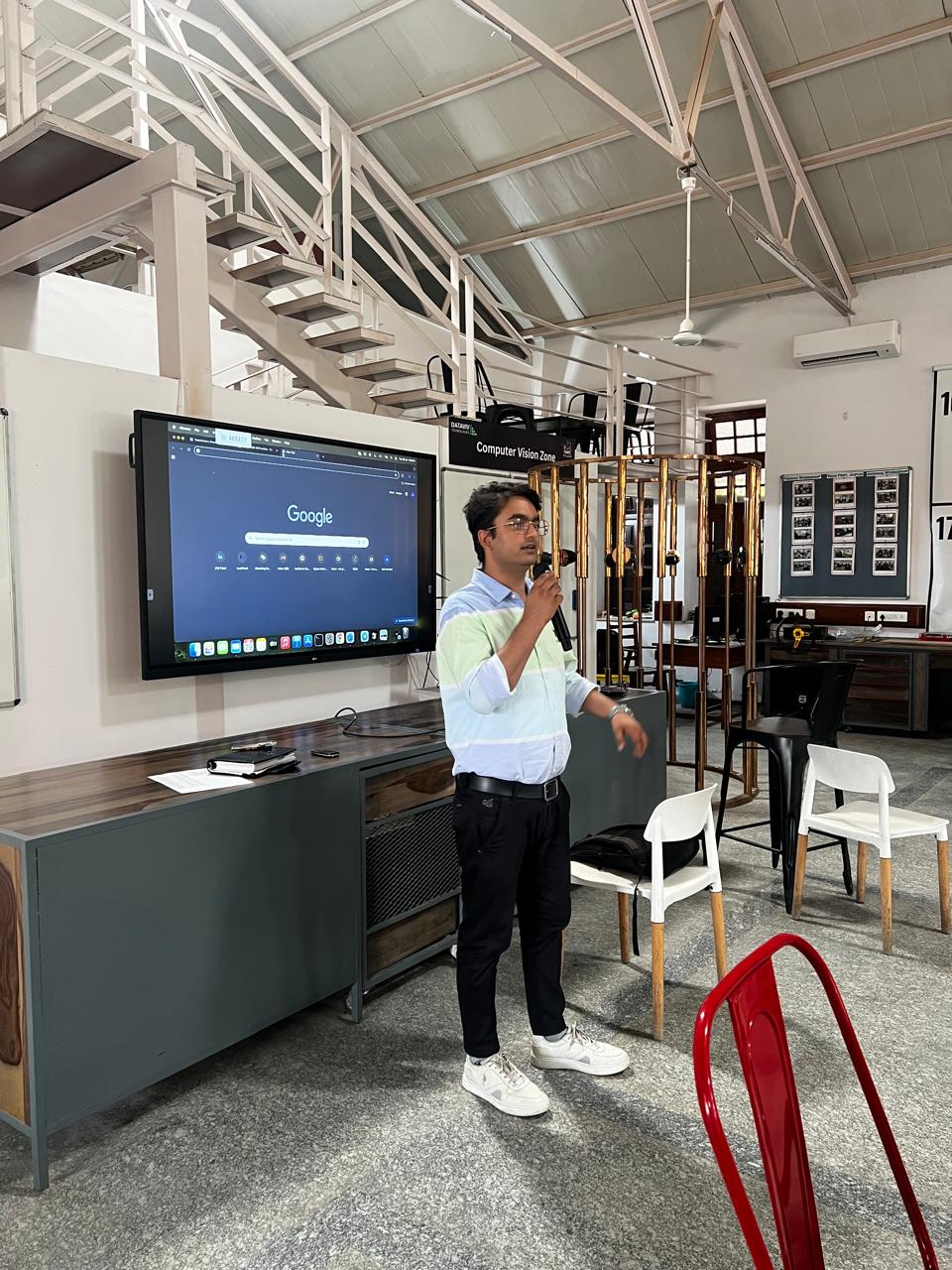
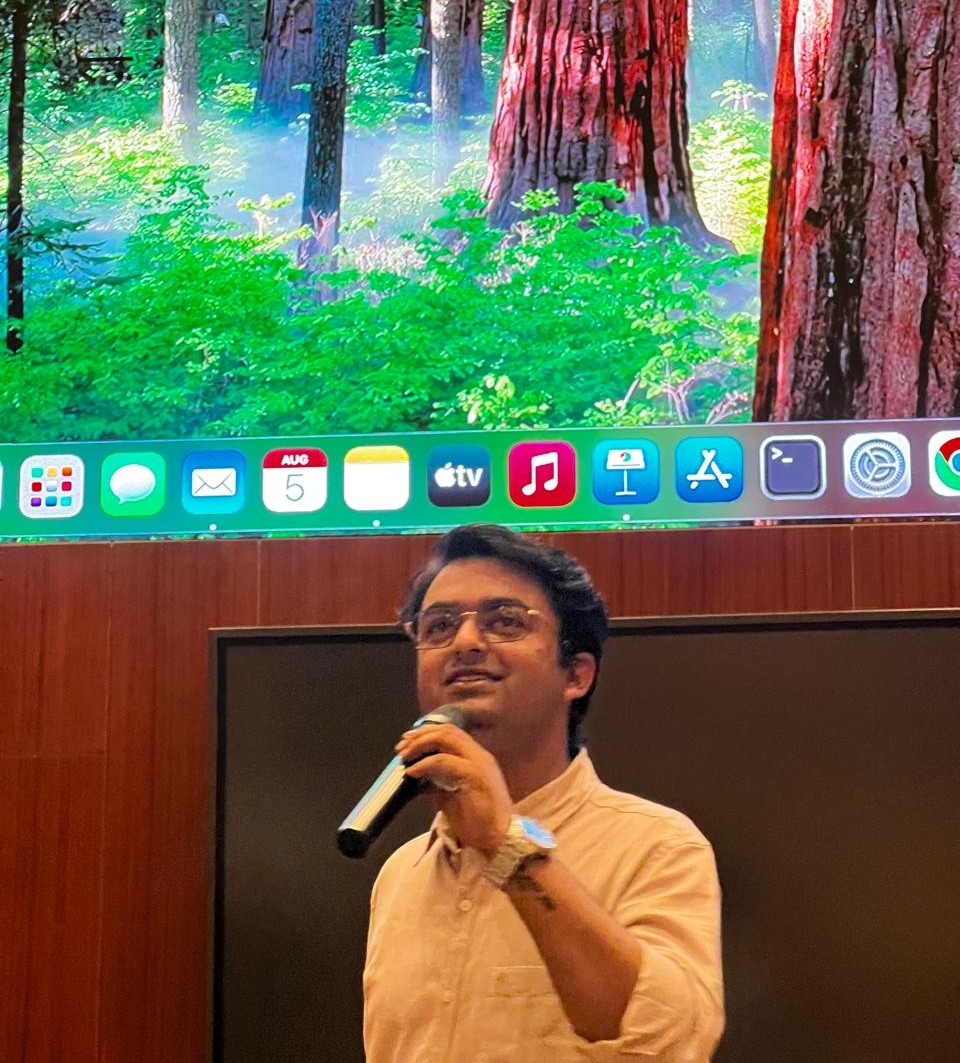
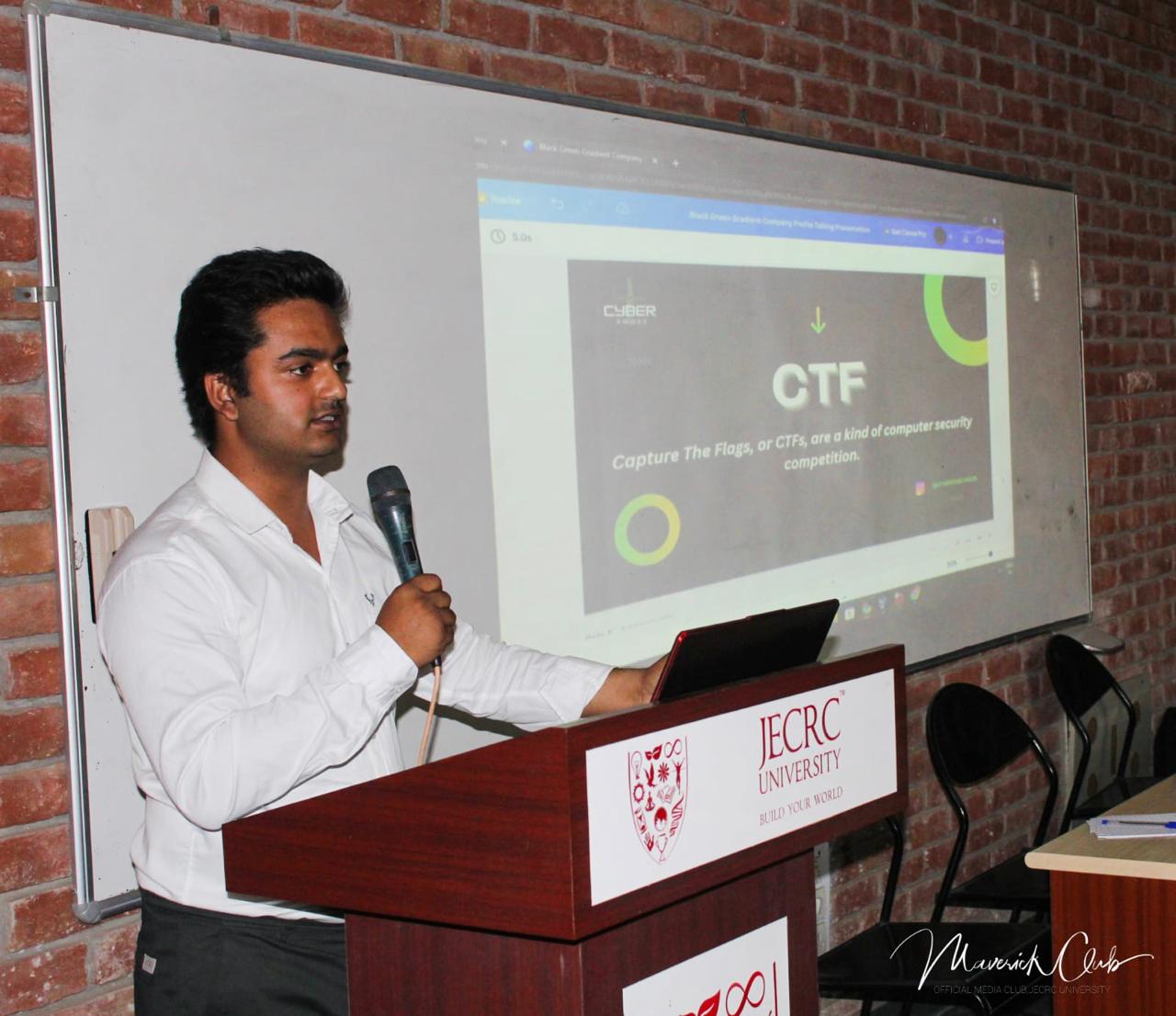
Faculty Training & Workshops in Action

Empowering educators with cutting-edge cybersecurity research & lab exposure
PROPRIETARY PEDAGOGY

The MRM - Framework

In cybersecurity, threats evolve at machine speed. Your ability to teach must keep pace. TSN Security introduces “The MRM-Framework”—a proprietary, AI-powered faculty development program designed to sharpen expertise.

Phase MPillar 01

Machine

Practical Ranges & Virtual Labs

The core teaching asset of the MRM Framework – the labs, cyber ranges, virtual environments, and hardware/software platforms that faculty must know to build realistic, hands-on learning experiences for students.

Phase RPillar 02

Recon

Threat Intelligence & Gap Scanning

The intelligence phase of the critical path for educators—continuous scanning of the threat landscape, identification of curriculum gaps, and assessment of learner readiness to ensure instruction is ahead of real-world attack vectors.

Phase MPillar 03

Module

Skill-Based Pedagogical Units

The actionable building block of the MRM Framework for faculty—the focused skill-based training module combining pedagogical techniques, lab exercises, and assessment strategies to translate machine-level knowledge into effective education.

AI-Enhanced Cybersecurity Curriculum Pyramid

Level 3 · Integrate

Curriculum Design

Pedagogical synthesis, capstone design, and custom university course integration.

Level 2 · Deepen

Analytical Frameworks

Advanced constructs, adversarial threat modelling, and attack surface analysis.

Level 1 · Groundwork

Foundational Principles

Core security principles, AI paradigms, and machine-level environment setups.

Faculty Development Curriculum

Industry-oriented learning designed for colleges, universities, and academic research labs seeking future-ready technology education.

1
Evolving Cyber Threat Landscape
Offensive, Defensive & Adversarial AI Paradigms
The Cyber Kill Chain Revisited with AI
MITRE ATT&CK Framework (Strategic & Tactical View)
AI-Driven Attack Vectors (Deepfakes, Autonomous Malware)
Defensive AI—Promise and Pitfalls
Ethics, Legality & Policy in AI-Augmented Cyber Ops
Future Trends – Quantum, AI vs. AI
Role of Cyber Educator in the AI Era
MRM Cybersecurity Intelligence Framework (Conceptual)
2
Deep Network Architecture for Security Analysts
Protocol Weaknesses (TCP/IP, DNS, BGP)
Traffic Interception & Manipulation Concepts
Encrypted Traffic Analysis – Theory & Limitations
Network Tunneling, Covert Channels & Exfiltration
Intrusion Detection Systems (Signature vs. Anomaly)
AI-Driven Network Anomaly Detection
Denial-of-Service & Distributed Attack Models
Network Forensics Fundamentals
Zero Trust Networking Principles
3
OWASP Top 10: Conceptual Root Causes
Authentication & Authorization Architecture Flaws
Injection Attacks – SQLi, XSS, Command Injection Logic
API Security Models (REST, GraphQL, gRPC)
API Abuse, Rate Limiting & Token Manipulation
AI-Based Static Code Analysis & Secure Code Review
AI-Driven Fuzzing & Payload Generation (Theoretical)
Web Application Firewalls & Bypass Theory
Secure SDLC & DevSecOps Concepts
Real-World Breach Case Studies (Conceptual Deconstruction)
4
Shared Responsibility Model & Cloud Attack Surfaces
Identity & Access Misconfigurations (IAM)
Cloud Logging & Monitoring Architecture (CloudTrail, Azure Monitor)
Serverless & Container Security Models
Data Exposure & Storage Misconfigurations
API Gateways & Microservices Attacks
AI-Driven Cloud Threat Detection & UEBA
Cloud Security Posture Management (CSPM) Concepts
DevSecOps Pipelines & Automation Logic
Major Cloud Breach Analyses
5
Endpoint Detection & Response (EDR) Philosophy
Malware Taxonomy & Behavioural Analysis
Ransomware, Fileless & Living-off-the-Land Techniques
Persistence, Privilege Escalation & Lateral Movement Logic
AI-Generated Malware & Polymorphism
Adversarial Machine Learning – Evading AI Detectors
AI-Assisted Malware Reverse Engineering Concepts
Memory-Based Attacks & Detection Theory
Endpoint Telemetry & AI-Driven Behavioural Baselining
Modern Malware Case Studies (Supply Chain, APT)
6
The Threat Intelligence Lifecycle
Strategic, Operational & Tactical Intelligence
Indicators of Compromise (IOC) vs. Indicators of Attack (IOA)
OSINT Techniques & Dark Web Conceptual Access
Adversary Profiling & Attribution Theory
Threat Feeds & Automated Ingestion Logic
AI-Based Intelligence Automation & NLP in CTI
Deception Technologies – Honeypots & Decoys
Mapping Threats to MITRE ATT&CK
Intelligence-Driven Teaching: Bringing CTI to the Classroom
7
Incident Response Lifecycle (NIST/SANS)
Alert Triage, Severity & Escalation Logic
Root Cause Analysis Frameworks
Containment, Eradication & Recovery Strategies
Forensic Imaging & Chain of Custody Concepts
Memory & Disk Forensics Fundamentals
Timeline Analysis & AI-Assisted Correlation
Insider Threat Investigation Logic
IR Communication & Stakeholder Management
IR Tabletop Exercises & Gamified Learning Design
8
Zero Trust Architecture (ZTA) Principles
Identity as the New Perimeter
Credential-Based Attacks (Passwords, Tokens, MFA Bypass)
Privileged Access Management (PAM) Models
Identity Federation & SSO Risks
AI-Based User & Entity Behaviour Analytics (UEBA)
Anomaly Detection in Access Patterns
Zero Trust Implementation Challenges
Compliance & Identity Governance
Designing a Zero Trust Curriculum Module
9
AI Attack Surface – Models, Data, Pipelines
Prompt Injection & Jailbreaking – Theory & Implications
Data Poisoning, Model Evasion & Extraction
OWASP Top 10 for LLM Applications
Privacy Leakage & Membership Inference Attacks
Secure AI Integration Practices
AI-Assisted Penetration Testing – Ethical Boundaries
Regulatory & Governance Aspects of AI Security
Threat Modelling AI Systems
Teaching AI Security: A Pedagogy Framework
10
Risk Management Frameworks (NIST RMF, ISO 27005)
Compliance & Regulatory Landscape (ISO 27001, DPDP Act, GDPR)
Security Metrics, Reporting & Board-Level Communication
Building a Cybersecurity Culture
Cyber Resilience & Business Continuity Concepts
Audit Logging, Governance & Evidence Collection
The Role of the Cyber Educator as Institutional Leader
Curriculum Design Workshop: Cybersecurity Track Blueprint
Faculty Development & Peer Mentoring Models
MRM Cybersecurity Leadership Framework
1
The evolution of trust: from centralized ledgers to distributed consensus
Data structures of a blockchain: blocks, headers, Merkle roots, transaction sets
Forks, orphan blocks, and chain reorganization mechanics
Public vs private vs consortium chains—architectural trade-offs
Nodes, validators, miners: roles, propagation dynamics, and economic incentives
The concept of finality: deterministic vs probabilistic consensus models
Real-world adoption patterns: supply chain, CBDC, credentialing, DePIN
2
Hash functions (SHA-256, Keccak-256) and their mathematical properties
Merkle trees and cryptographic proofs of inclusion / exclusion
Digital signatures: ECDSA, Schnorr, BLS – mathematics and implementation
Wallet derivation: BIP32/39/44, HD wallets, and key management best practices
Consensus algorithms deep dive: PoW, PoS, DPoS, PBFT, HotStuff, Tendermint
Security of consensus: nothing-at-stake, long-range attacks, 51% attacks, eclipse attacks
Post-quantum cryptography readiness and current mitigation strategies
3
Solidity syntax, data locations (storage, memory, calldata), and the ABI spec
EVM internals: stack, memory, storage layout, opcodes, and gas metering
Development toolchain: Hardhat, Foundry, Remix, Tenderly
Contract interaction patterns: low-level calls vs transactions, events, error handling
Testing methodologies: unit tests, fuzz testing, symbolic execution overview
Upgradeable contracts: proxy patterns (UUPS, Transparent), storage collisions
Deployment pipelines and contract verification on Etherscan & Sourcify
4
Reentrancy vulnerabilities (single-function, cross-function, cross-contract)
Integer overflows & underflows (pre-0.8 pitfalls and SafeMath mechanics)
Access control flaws: missing onlyOwner, tx.origin usage, unprotected selfdestruct
Unchecked return values and failed ETH/token transfers
Denial of Service (block gas limit exhaustions, revert-based griefing)
Front-running and sandwich attacks: how priority gas auctions (PGA) work
Oracle manipulation vectors and price oracle pitfalls
Bad randomness vulnerabilities (blockhash, block.timestamp, on-chain sources)
5
Advanced exploits: read-only reentrancy, signature replay, permit-based phishing
MEV (Miner/Maximal Extractable Value) and block-building strategies
Flash loan attacks: arbitrage, collateral swapping, governance manipulation
AI-assisted auditing: using LLMs to explain code, generate test cases, and discover flaws
Formal verification tools: Certora Prover, Echidna, KEVM – writing invariants and rules
Static analysis tools: Slither, Mythril, Aderyn – CI/CD pipeline integration
6
DeFi stack: AMMs (Uniswap v2/v3), lending (Compound, Aave), derivatives, yield aggregators
Economic exploit patterns: impermanent loss, rebase token manipulation, TWAP vs spot price
Governance attacks: flash loan voting, proposal timing manipulation, vote delegation abuse
Cross-protocol composability risks: cascading failures across interconnected protocols
Insurance protocols and quantitative risk assessment frameworks
Real-world case studies: Euler Finance, Mango Markets, Beanstalk, Rari Capital
7
Token standards deep dive: ERC-721, ERC-1155, ERC-4907, ERC-6551 (Token Bound Accounts)
NFT metadata, decentralized storage (IPFS, Arweave), and permanence issues
Web3 identity: ENS, Soulbound tokens (SBTs), Verifiable Credentials, DID standards
Cross-chain bridges: lock-and-mint, burn-and-mint, liquidity networks – security trade-offs
Bridge vulnerabilities: validator takeover, message forgery, infinite mint (Wormhole, Ronin)
Cross-chain messaging protocols: LayerZero, Chainlink CCIP, Hyperlane
8
Blockchain data structures for forensics: UTXO vs account models, event logs, internal txs
Graph-based analysis: clustering, address attribution heuristics, change address detection
Forensic tools: Chainalysis (demo), TRM Labs, Dune Analytics, The Graph, BigQuery datasets
AI-based analytics: anomaly detection in transaction graphs, GNNs for fraud detection
Tracing stolen funds: mixers (Tornado Cash), cross-chain hops, peeling chains
Legal admissibility of on-chain evidence and the role of expert witnesses
9
AI agents on-chain: autonomous smart contracts using off-chain compute (Chainlink Functions, Oracles)
Decentralized AI model training and inference platforms (Bittensor, Gensyn)
Zero-knowledge machine learning (zkML): verifying inference without revealing inputs or model weights
AI-driven DeFi strategies: automated yield optimization, MEV bots, AI-based arbitrage
AI security risks: adversarial attacks on models, data poisoning, oracle manipulation via AI
The intersection of AI, DAOs, and autonomous governance
10
On-chain governance models: token voting, conviction voting, quadratic voting, delegated voting
DAO legal wrappers and liability: Wyoming DAO LLC, Marshall Islands DAOs, regulatory uncertainty
Global regulatory landscape: MiCA, FATF travel rule, Indian VDA taxation and PMLA applicability
Academic blockchain programs: curriculum design, accreditation pathways, research funding
Integrating blockchain into existing CS/IT/Finance university curricula
Ethics, responsible disclosure, and bug bounty programs for student research
1
AI vs ML vs DL taxonomies and historical context
The complete machine learning workflow: problem formulation → data engineering → modeling → deployment
The No Free Lunch theorem and the Ugly Duckling theorem – implications for model selection
Statistical learning theory basics: empirical risk minimization, approximation-estimation tradeoff
Causal fairness metrics and counterfactual ethics in high-stakes research (healthcare, criminal justice, finance)
Algorithmic bias, transparency, and the regulatory landscape (GDPR, EU AI Act, India's DPDP Act)
2
Missing data mechanisms (MCAR, MAR, MNAR) and advanced imputation (MICE, iterative imputation)
Outlier detection: z-score, IQR, DBSCAN for outlier removal, robust scaling
Feature scaling (normalization, standardization, robust scaler) and encoding (one-hot, ordinal, target, Helmert)
Exploratory Data Analysis (EDA) with Python: automated profiling (pandas-profiling, Sweetviz), statistical summaries
Data versioning with DVC (Data Version Control) – tracking datasets and ML pipelines
Building reusable sklearn Pipeline and ColumnTransformers with preprocessing guardrails
3
Linear regression: normal equations, MLE derivation, assumptions and diagnostics
Logistic regression: MLE via gradient descent, decision boundaries, multi-class (One-vs-Rest, softmax)
Decision trees: impurity measures (Gini, entropy), pruning; building a tree from scratch
Random forests: bagging, out-of-bag error, feature importance
k-Nearest Neighbors (k-NN): distance metrics, Voronoi diagrams, curse of dimensionality
Model selection via No Free Lunch theorem and the role of inductive bias
4
Bias-variance decomposition for squared-error loss—mathematical derivation
Maximum Likelihood Estimation (MLE) for Generalized Linear Models (GLMs)
Nested cross-validation for unbiased performance estimation and hyperparameter tuning
Robust classification metrics: precision-recall curves, AUC-ROC, F1 (micro/macro/weighted)
Statistical tests for model comparison: McNemar's test, paired t-test, confidence intervals
Overfitting detection: learning curves, validation curves
5
SVM primal and dual formulation, Representer Theorem, and kernel tricks (RBF, polynomial, custom)
Gradient boosting machines: XGBoost, LightGBM, CatBoost—mathematical framework and hyperparameters
Bayesian optimization: Gaussian Processes for hyperparameter tuning (acquisition functions: EI, UCB)
Loss functions: Huber, quantile, log-cosh; regularization: L1, L2, elastic-net in a Bayesian context
Model calibration: Platt scaling, isotonic regression, Brier score
Stacking, blending, and ensemble diversity
6
K-means via the EM algorithm: objective minimization, convergence proof
DBSCAN: density-based clustering, reachability, and core point topology
PCA via SVD: eigen decomposition, explained variance, reconstruction error
t-SNE and UMAP: manifold learning, stochastic neighborhood embedding, theoretical trade-offs
Anomaly detection: CUSUM for sequential data, Isolation Forest, One-Class SVM
Spectral clustering and graph Laplacians
7
The Universal Approximation Theorem and its limitations
Computational graphs and automatic differentiation (Jacobians, vector-Jacobian product)
Manual backpropagation for a multi-layer perceptron (MLP) with MSE loss
Activation functions: ReLU, GELU, Swish; vanishing/exploding gradients
CNN building blocks: convolution, pooling, batch normalization; receptive fields and parameter sharing
Transfer learning for vision: fine-tuning ResNet, EfficientNet, ViT on custom datasets
8
Backpropagation Through Time (BPTT) derivation for RNNs and LSTMs
Gating mechanisms: forget, input, output gates; LSTM vs GRU
Sequence-to-sequence models and attention: scaled dot-product attention, multi-head attention
Transformer architecture: positional encoding, encoder-decoder, feed-forward layers
Fine-tuning large language models: BERT, GPT for domain adaptation (text classification, NER)
Efficient fine-tuning: LoRA, adapters
9
Containerization: Dockerfile best practices, CUDA-enabled images, multi-stage builds
Model serving: RESTful APIs with FastAPI, gRPC for high-throughput inference
CI/CD for ML: GitHub Actions to automate testing, building, and pushing Docker images
Experiment tracking with MLflow: logging parameters, metrics, and artifacts
Model registry and versioning; promoting models from staging to production
Infrastructure as Code (Terraform) basics for ML (conceptual)
10
Deploying end-to-end AI pipelines: from data ingestion to inference
Concept drift and data drift: Population Stability Index (PSI), Kolmogorov-Smirnov (KS) test
Live monitoring dashboards: Prometheus + Grafana for model metrics
Managing the MTD (Mean Time to Detect) and MTTR (Mean Time to Respond) lifecycle for model incidents
Model retraining strategies: triggers, automation, rollback
Delivering a production-grade capstone project: problem scoping, ethical review, deployment, and monitoring
Academic Value Proposition

Why Our FDP Stands Out

We deliver a transformative educational experience that bridges the gap between research theory and real-world technology application.

Expert-Led Learning

Learn directly from seasoned security researchers, AI scientists, and active practitioners.

Live Attack Architectures

Deep architectural understanding of attack surfaces, threat vectors, and neutralization logic.

Red Team-Blue Team Demystified

Master full attack-to-defense cycle strategies to teach realistic offensive and defensive tactics.

AI-Powered Curriculum

Integrates deepfakes, autonomous malware, and adversarial ML into ready-to-use syllabi.

Pedagogy-First Capstone

Design curriculum integration plans, lab rubrics, or new university lecture frameworks.

No-Pressure Environment

Collaborative peer academic assessment with zero high-stress exams or competitive pressure.

Optional Demonstrations

Voluntary tool walkthroughs and live lab demonstrations for reinforced understanding.

Industry & Academic Engagement

Opportunities for guest lecturing, research grants, and judging at corporate events.

FACULTY ESSENTIALS

Your FDP Toolkit

Five essential components delivered to every participating educator.

Comprehensive Courseware

Detailed lecture materials, conceptual frameworks, and discussion guides for deep intellectual delivery.

10 AI-Integrated Theory Modules

Fully structured, expert-led curriculum blending advanced cybersecurity with AI-driven paradigms.

Curated Case Studies & Analyses

Real-world security incidents unpacked at the theoretical level, requiring no complex lab setup to teach.

Pedagogy & Curriculum Guides

Ready-to-adapt resources to map knowledge directly into your existing university syllabi or new electives.

Peer Network & Collegiality

Ongoing dialogue, resource sharing, and collaborative curriculum development with fellow cyber faculty.

CLASSROOM VALUE

Why This Matters in the Classroom

01
Conceptually Armed Educators

Deep theoretical mastery to teach the 'why' and 'how' of AI-powered attacks.

02
Built for Every Academic Role

AI-integrated insight adding immediate value to teaching, research, and syllabus design.

03
Guide AI Integration

Intellectually frame adversarial ML and deepfakes for future-ready student teaching.

04
Academic Leadership & Electives

Fresh expertise to innovate university curricula and propose new degree electives.

Transform Your Teaching with AI & Cyber Knowledge

Bring TSN Security's Faculty Development Program to your institution. Connect with our academic outreach team.