1-Year Job-Oriented Program

College & University Programs

Complete job-oriented security program preparing students for in-demand careers in cybersecurity with placement assistance and industry-aligned curriculum.

College Cybersecurity & AI Program Illustration

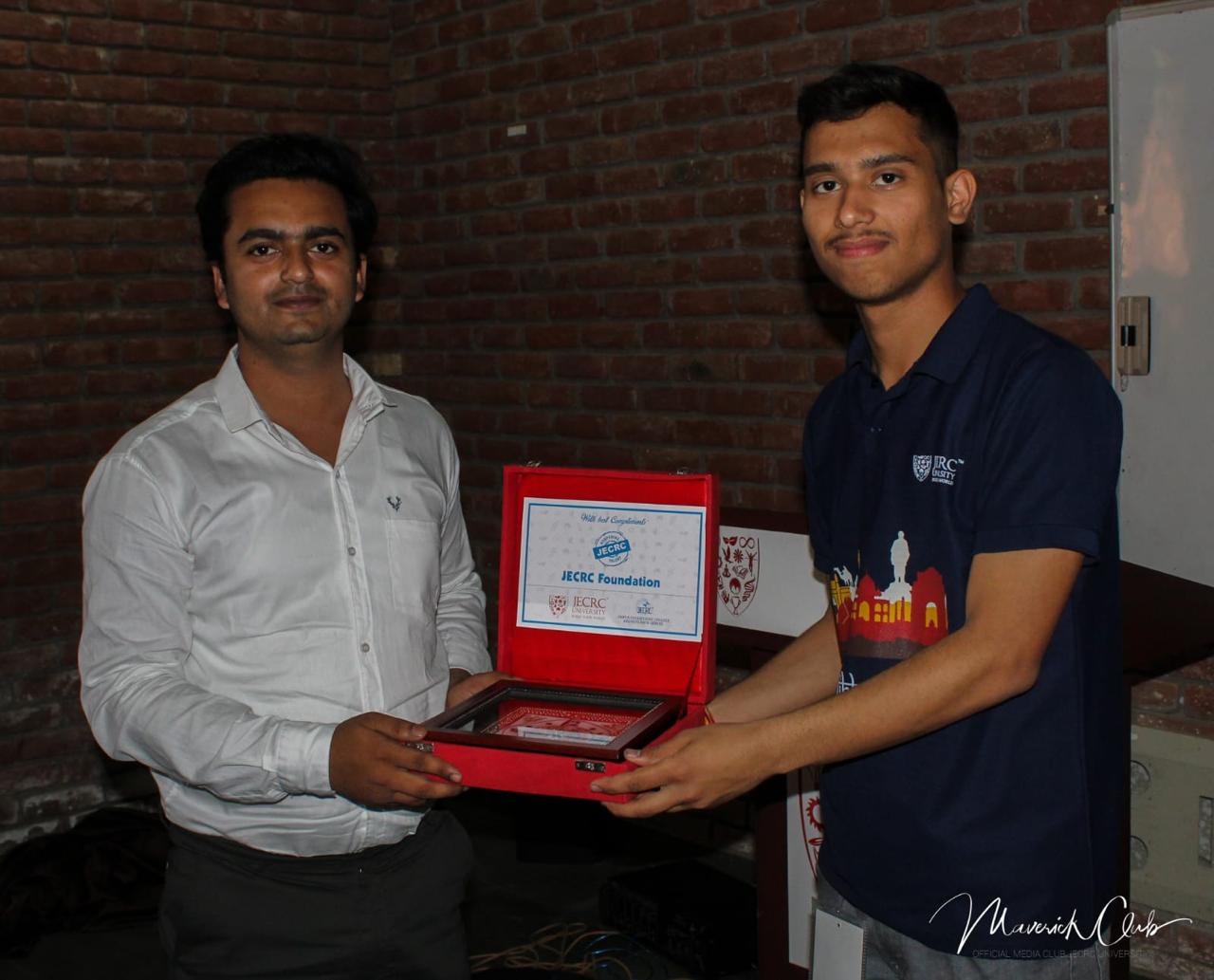
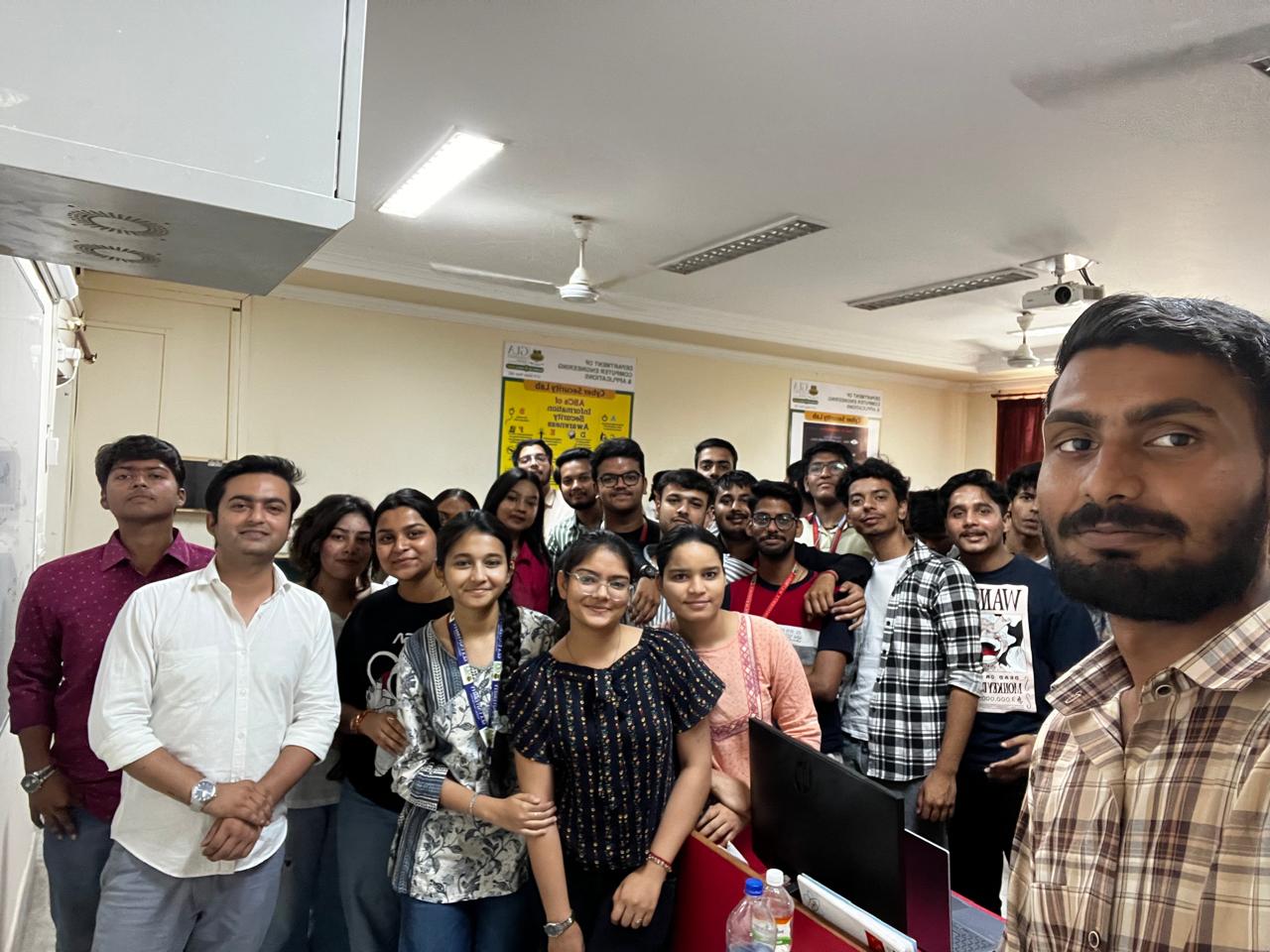
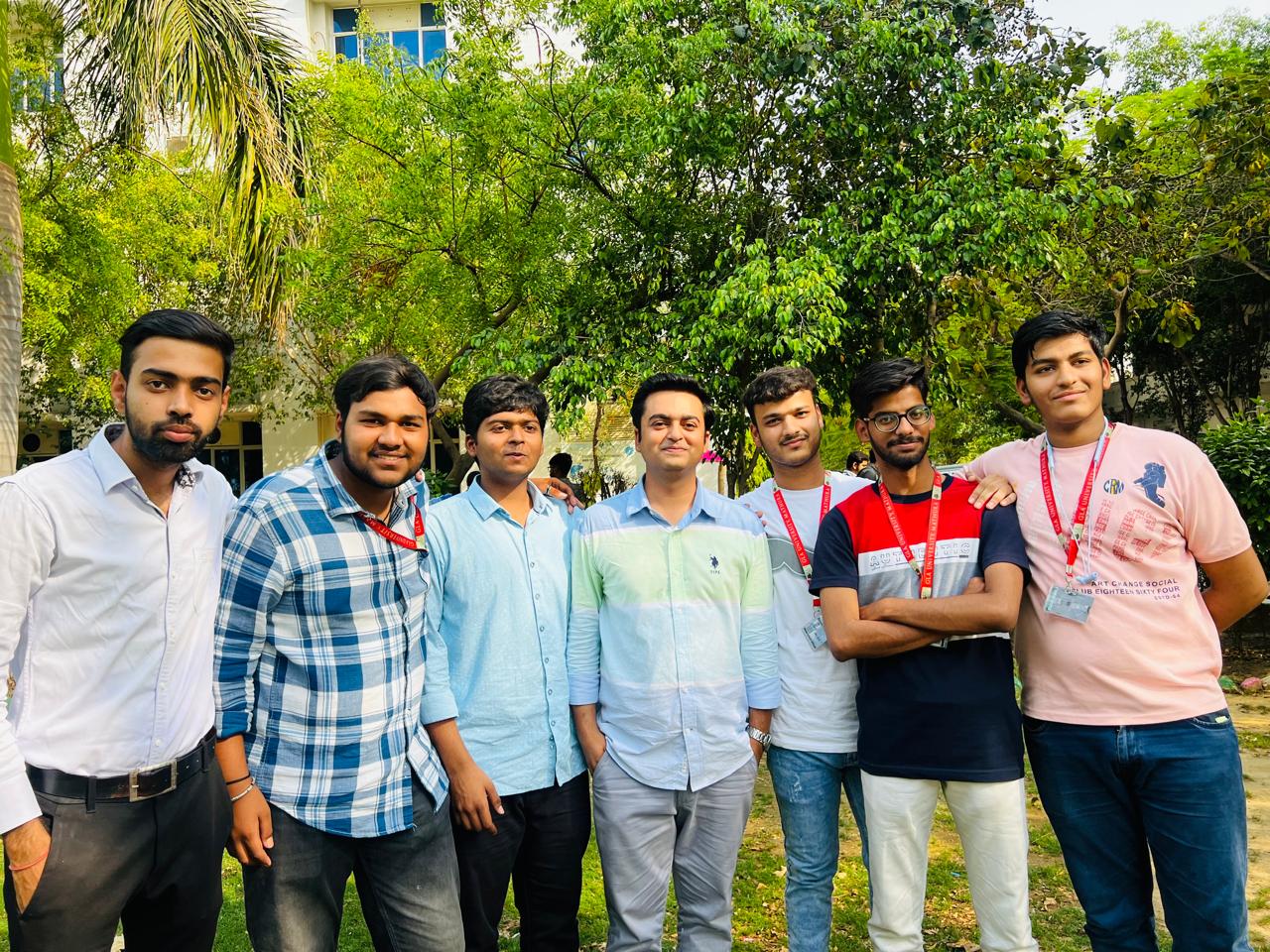
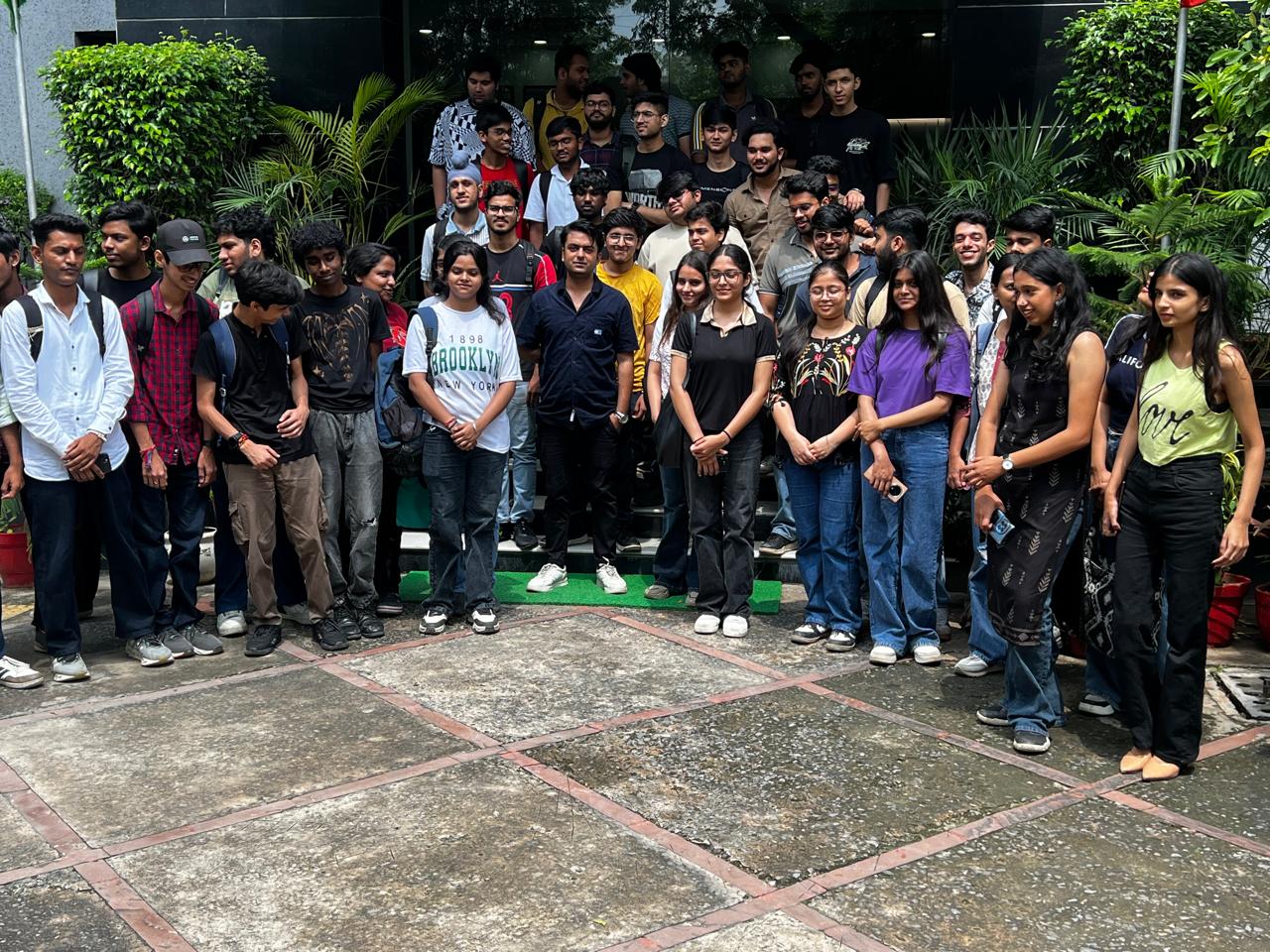
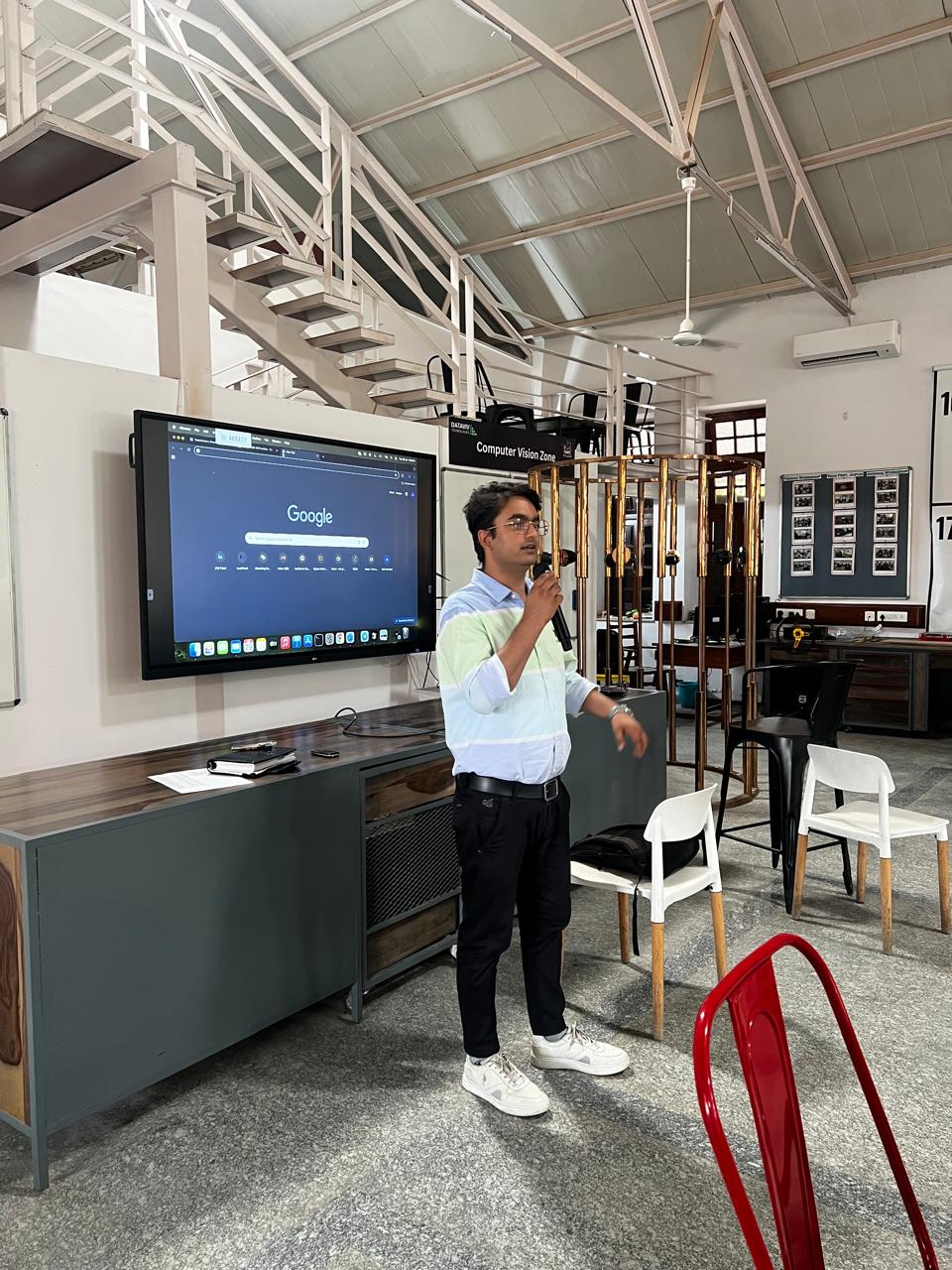
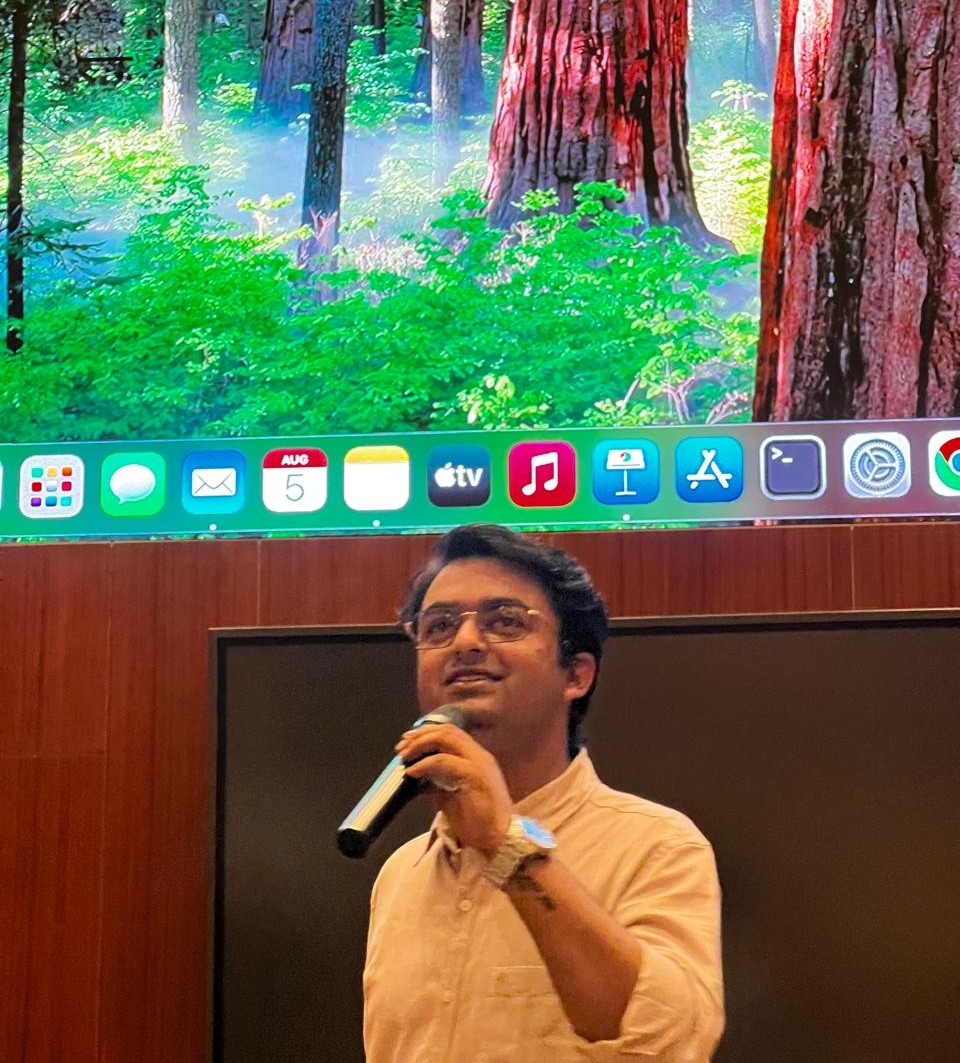
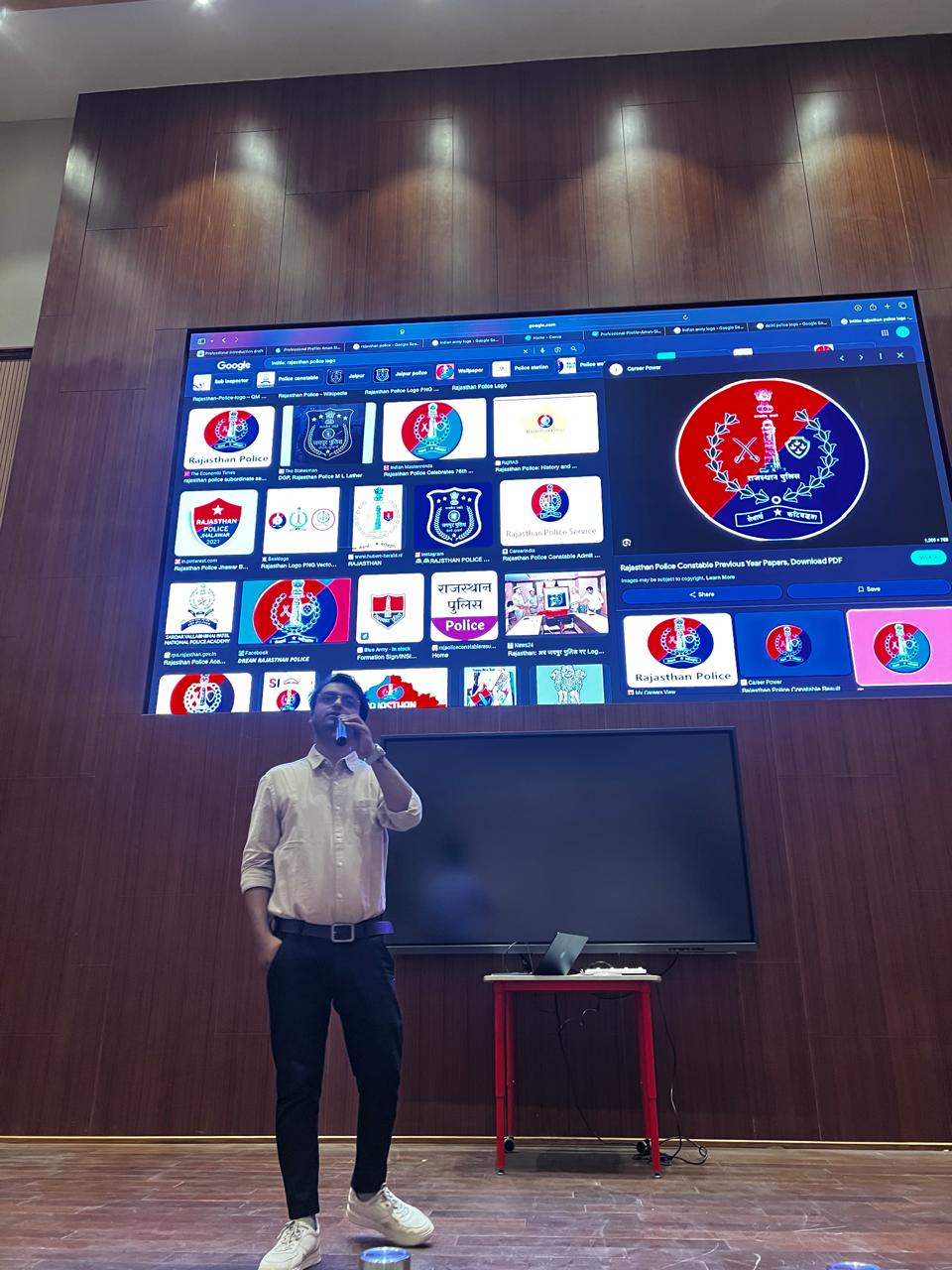
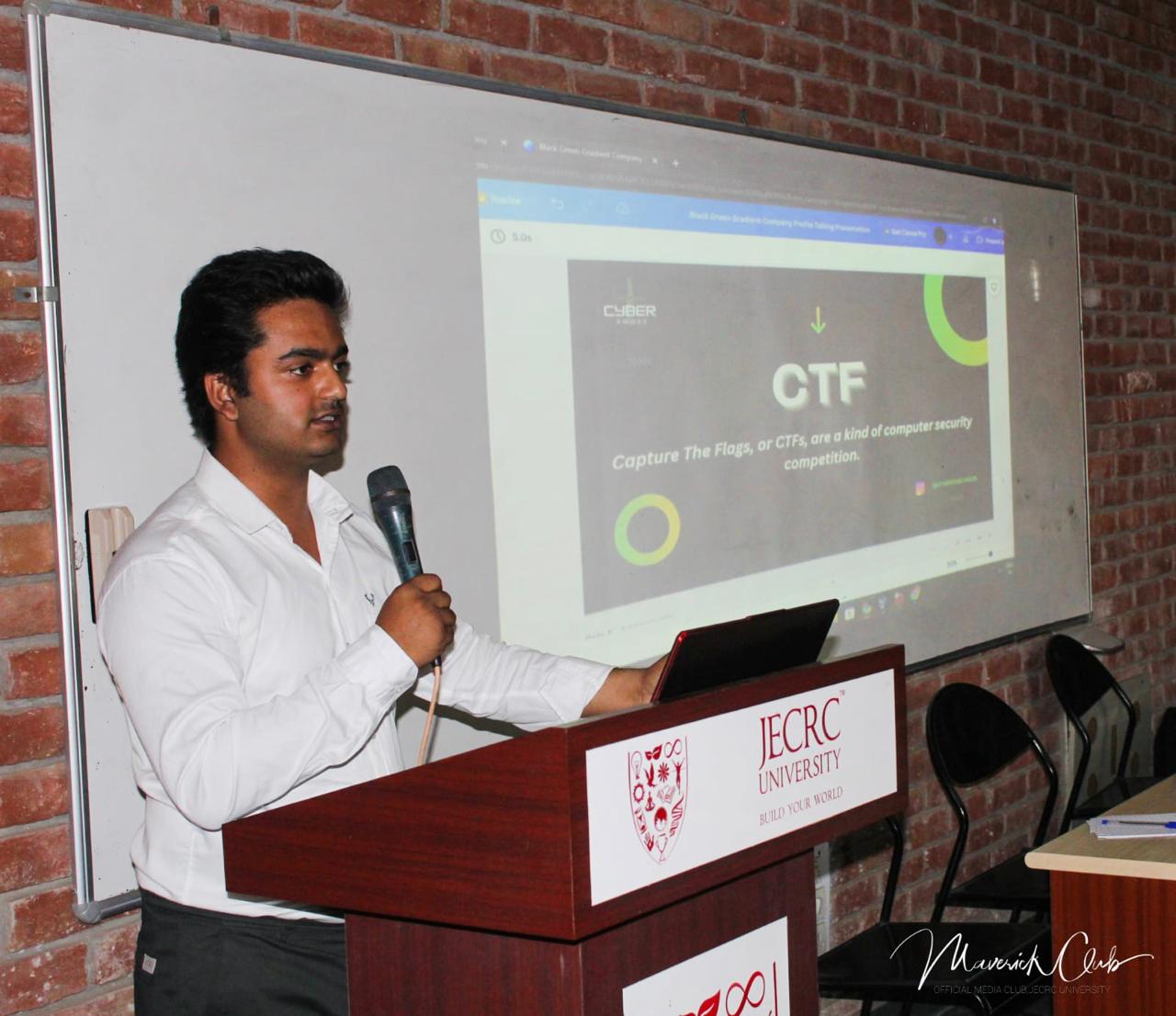
Training Labs & Campus Life

Real-world practical exposure
Program Modules & Curriculum

Industry-oriented learning designed for colleges, universities, and academic partnerships seeking future-ready technology education.

1
Introduction to Artificial Intelligence, Machine Learning, Deep Learning (conceptual and practical differences)
Introduction to Blockchain, Web3, and decentralized technologies
Prompt Engineering fundamentals: crafting effective prompts for security tasks
Intersection of AI and cybersecurity: how AI is changing attacks and defenses
Fundamentals of cybersecurity: CIA triad, threats, vulnerabilities, risk
Setting up a learning environment (Linux, command-line basics, scripting prerequisites)
2
Open Source Intelligence (OSINT) techniques: gathering data from public sources
Google Dorking and advanced search operators for information discovery
Active vs. Passive reconnaissance: what's legal, what's ethical, and how to stay on the right side
Subdomain enumeration using tools (Amass, Subfinder, Sublist3r) and manual methods
Service fingerprinting and banner grabbing
Identifying technologies, versions, and potential weaknesses from the outside
3
The OWASP Top 10 2025: A1-A10 explained with real-world examples
Injection attacks (SQLi, Command Injection, LDAP) – how they work and how to find them
Cross-Site Scripting (XSS): reflected, stored, DOM-based
Server-Side Request Forgery (SSRF) – internal network access from a vulnerable app
Bug bounty methodology: responsible disclosure, writing effective reports, CVSS scoring
Introduction to bug bounty platforms (HackerOne, Bugcrowd) – for ethical learning only
4
End-to-end penetration testing process: planning, reconnaissance, scanning, exploitation, post-exploitation, reporting
Advanced exploitation techniques: command injection to shell, file inclusion to code execution
API security testing: REST, GraphQL, authentication/authorization flaws (BOLA, BFLA)
File upload vulnerabilities: bypassing filters, client-side vs server-side checks, web shell uploads
Automation vs manual testing – when to use which
Building a penetration testing checklist based on industry standards (PTES, OWASP)
5
Advanced server-side attacks: SSRF chaining to internal services, XXE (XML External Entity) to data exfiltration
OAuth 2.0/JWT vulnerabilities: token forging, algorithm confusion, missing signature verification
Race conditions: time-of-check to time-of-use (TOCTOU) vulnerabilities, business logic flaws
AI Offensive Tools: how AI can automate vulnerability discovery, write exploit code, and craft phishing
AI Defensive Tools: using AI for WAF bypass detection, anomaly detection, and blue team assistance
Model exploitation: adversarial examples, model inversion, data poisoning (overview, ethical considerations)
6
Network scanning fundamentals: host discovery, port scanning, service version detection (Nmap, Masscan)
Metasploit Framework: modules, payloads, handlers, and meterpreter
Privilege escalation (PrivEsc): common Linux/Windows misconfigurations, kernel exploits, SUID/SGID, token manipulation
Post-exploitation: pivoting, lateral movement, persistence
Blue team monitoring: detecting scanning, exploitation, and C2 traffic using logs and SIEM
Active defense strategies: network segmentation, IDS/IPS, honeypots
1
AI vs ML vs DL: scope, history, and relationship
Supervised, unsupervised, and reinforcement learning paradigms
The machine learning workflow: problem framing, data collection, training, evaluation, deployment
Ethical considerations in AI: bias, fairness, accountability, transparency
Overview of the ML ecosystem: Jupyter, NumPy, Pandas, scikit-learn
Setting up a reproducible development environment
2
Handling missing data: imputation techniques, deletion strategies
Outlier detection and treatment: IQR, Z-score, isolation forests
Feature scaling: normalization, standardization, min-max, robust scaling
Encoding categorical variables: one-hot, label, ordinal, target encoding
Exploratory Data Analysis (EDA) with Python: summary statistics, correlation heatmaps, distribution plots
Building reproducible data pipelines: scikit-learn Pipeline and ColumnTransformer
3
Linear and logistic regression: assumptions, interpretation, regularization (L1/L2)
Decision trees, random forests, and gradient boosting intuition
Support Vector Machines (SVM): kernels, margins, and hyperplane concept
k-Nearest Neighbors (k-NN): distance metrics, curse of dimensionality
Evaluation metrics: accuracy, precision, recall, F1, ROC-AUC, RMSE, MAE
Cross-validation strategies (k-fold, stratified, leave-one-out) and hyperparameter tuning (GridSearchCV, RandomizedSearchCV)
4
Clustering algorithms: k-means, hierarchical clustering (dendrograms), DBSCAN (density-based)
Dimensionality reduction: Principal Component Analysis (PCA), t-SNE (visualization)
Market basket analysis (association rules, Apriori algorithm)
Anomaly detection with unsupervised methods (Isolation Forest, One-Class SVM)
Evaluation of unsupervised models: silhouette score, elbow method, domain validation
5
Biological inspiration and artificial neurons; perceptrons
Activation functions: sigmoid, tanh, ReLU, softmax
Backpropagation and gradient descent (batch, mini-batch, stochastic)
Convolutional Neural Networks (CNNs): convolution, pooling, architectures (LeNet, ResNet)
Recurrent Neural Networks (RNNs), LSTMs, and sequence modeling
Transfer learning: using pre-trained models (ImageNet, HuggingFace) and fine-tuning
Overfitting prevention: dropout, batch normalization, data augmentation
6
Model serving: REST APIs with Flask/FastAPI, serialization (pickle, ONNX, joblib)
Containerization with Docker: Dockerfiles, images, containers, registries
Continuous Integration/Continuous Deployment (CI/CD) pipelines for ML (GitHub Actions, GitLab CI)
Monitoring models in production: concept drift, data drift, performance degradation
Model retraining strategies and automated retraining triggers
End-to-end capstone project: from problem definition to deployed and monitored API
1
Core concepts: blocks, chains, consensus mechanisms (PoW, PoS, DPoS, PBFT)
Immutability, decentralization, and trustlessness
Public vs private/permissioned chains and their trade-offs
Peer-to-peer network architecture, nodes, and transaction propagation
Wallets, addresses, and the UTXO vs account-based model
Real-world applications beyond cryptocurrency: supply chain, identity, healthcare, credentialing
2
Hash functions (SHA-256, Keccak-256) and their role in block integrity
Merkle trees and efficient verification of transaction inclusion
Digital signatures: ECDSA, EdDSA, recovery of public keys, signature malleability
Wallet creation: mnemonic phrases, BIP32/39/44 hierarchical deterministic keys
Key management best practices and common user mistakes
Common cryptographic attacks: collision resistance, preimage attacks, nonce reuse, side-channel attacks
Mitigations and secure implementation patterns
3
Solidity syntax, data types, mappings, structs, and modifiers
Development environments: Remix IDE, Hardhat, Foundry
Compilation, ABI, and bytecode
Contract interaction, events, and error handling
Gas optimization: storage vs memory, view functions, loop minimization
Testing smart contracts: unit tests, integration tests, and testnet deployment
Debugging: stack traces, console.log, and Hardhat/Foundry debuggers
Introduction to upgradeable patterns and proxies (conceptual)
4
Front-end integration with blockchain: ethers.js, wagmi, viem
Wallet connection (MetaMask, WalletConnect) and transaction signing flows
Reading on-chain data vs submitting transactions
IPFS and decentralized storage: pinning, content addressing, gateway access
Building full-stack dApps: React/Next.js + smart contract backend
User experience for Web3: gasless meta-transactions, account abstraction overview
Live dApp deployment on IPFS or a decentralized hosting platform (e.g., Fleek, Spheron)
5
Token standards: ERC-20 (fungible), ERC-721 (non-fungible), ERC-1155 (multi-token)
DeFi primitives: Automated Market Makers (Uniswap v2/v3), lending protocols (Aave), staking and yield farming
Liquidity pools, impermanent loss, and fee structures
NFT minting, metadata standards, and secondary marketplaces (OpenSea, Blur)
Decentralized Autonomous Organizations (DAOs): governance tokens, voting mechanisms, timelocks, and proposal execution
Incentive design and potential vulnerabilities (governance attacks, flash loan exploits, oracle manipulation)
6
Smart contract vulnerability classes: reentrancy, integer overflow/underflow, front-running, access control flaws, bad randomness, unverified external calls
Common DeFi attacks: oracle manipulation, flash loan attacks, sandwich attacks, governance takeovers
Security analysis tools: static analysis (Slither, Mythril, Aderyn), formal verification (Certora, Echidna, KEVM)
Audit methodology: manual code review, line-by-line analysis, test case design, fuzzing, invariant testing
Professional audit reporting: structure (executive summary, findings by severity, proof-of-concept, remediation)
Incident response and post-mortem analysis: how to react to a hack, whitehat rescue, coordination with exchanges
Responsible disclosure and bug bounty programs in Web3

What Makes Our Program Special

Top Trainers from India

Learn from industry-leading cybersecurity professionals with 10+ years of experience. Our trainers have worked on major security projects.

Job-Oriented Content

Every module is designed with employment in mind. We focus on skills that companies actually need with industry certifications.

Hands-On Labs & Projects

Learn by doing with practical lab environments, capstone projects, and real-world security scenarios. Build a portfolio.

Placement Assistance

We provide career guidance, interview preparation, and direct connections with major companies in the security industry.

Career Outcomes

Where Our Graduates
Get Hired

Real roles. Real companies. Our program is built around the skills employers actually hire for.

🛡️
Entry → Mid
₹4–8 LPA

Security Analyst

Monitor threats, analyze security events, and protect organizational infrastructure.

JOB READY
⚡
Mid
₹6–14 LPA

Penetration Tester

Simulate attacks to identify vulnerabilities before malicious actors exploit them.

JOB READY
🔍
Entry → Mid
₹4–10 LPA

OSINT Investigator

Gather and analyze open-source intelligence for law enforcement and corporate clients.

JOB READY
💻
Mid → Senior
₹8–18 LPA

Digital Forensics Expert

Investigate cyber incidents, recover evidence, and support legal proceedings.

JOB READY
📡
Entry → Mid
₹4–9 LPA

SOC Engineer

Work in Security Operations Centers to detect, respond to, and remediate security incidents.

JOB READY
🎯
Senior
₹12–25 LPA

Cybersecurity Consultant

Advise organizations on security strategy, compliance, and risk management frameworks.

JOB READY

Our Expert Trainer Network

50+

Certified Security Experts

CISSP, CEH, OSCP certified professionals

25+

Years Industry Experience

Combined from India's leading tech companies

100%

Student Success Rate

All graduates are job-ready

SUCCESS ROADMAP

After Program Completion

We don't just train you; we bridge the gap between education and a professional career.

Outcome 01

Certification

Industry-recognized completion certificate

Outcome 02

Job Ready

Prepared for senior security roles

Outcome 03

Industry Network

Connect with leading companies

Outcome 04

Career Growth

Placement support and career guidance

Launch Your Cybersecurity Career

Join our job-oriented program and get placed in top security companies.

Apply Now